The Power of Integrated Digital Marketing: Unlocking Success

The Power of Integrated Digital Marketing: Unlocking Success

Integrated Digital Marketing

Success in the rapidly evolving digital marketing landscape hinges on seamlessly integrating strategies across various channels. As businesses navigate this dynamic terrain, the power of integrated digital marketing emerges as a pivotal force.

In this blog, we delve into the core principles and profound impact of integrated digital marketing, exploring key components, successful examples, and the transformative role it can play in your overall marketing plan.


What is Integrated Digital Marketing

Integrated digital marketing is a holistic approach that involves coordinating and aligning various digital marketing channels and strategies. It aims to create a seamless and unified experience for the target audience. This approach entails integrating different online marketing channels, technologies, and platforms to deliver a consistent brand message and optimize the customer journey across the digital landscape.
Integrated Digital Marketing2

5 Benefits of Integrated Digital Marketing

Integrated digital marketing offers many benefits, combining key components contributing to overall success and realizing significant advantages beyond individual channels. Let’s explore five benefits derived from the integration of various strategies:

1.      Consistent Brand Messaging

In the dynamic realm of digital marketing, consistency is paramount. Integrated digital marketing ensures a unified brand message across diverse channels, establishing consumer trust and recognition. This cohesive narrative creates a seamless experience, which fosters an enhanced overall perception irrespective of the chosen platform.

2.      Maximum Reach through Multi-Channel Campaigns

The true power of integration shines through in multi-channel campaigns that strategically combine the strengths of various platforms. Seamlessly blending SEO, social media, content marketing, and other channels allows businesses to cast a wider net, engaging audiences at multiple touchpoints throughout their customer journey. This comprehensive approach maximizes reach and impact, creating a holistic brand presence.

3.      Unified Brand Experience

Integrated digital marketing transcends the sum of its components; it’s about creating a seamless and unified brand experience for consumers. Regardless of the platform, this approach enhances customer satisfaction and fosters loyalty. A consistent and cohesive experience across channels contributes to a positive experience.

4.      Enhanced Customer Journey Mapping

Integrated strategies empower businesses to map the customer’s journey through the sales funnel, from awareness to conversion. By tailoring content and interactions to meet customer needs at each stage, businesses can provide a personalized and practical customer experience, increasing the likelihood of conversion.

5.      Data-Driven Optimization and Adaptation

Integrated digital marketing empowers businesses with data analytics for informed decision-making. Real-time optimization and tailored strategies based on evolving consumer preferences become possible, ensuring continuous improvement and alignment with changing behaviors.

Mapping Customer Journey

Overcoming Challenges

An integrated digital marketing strategy aims to break down silos between different digital marketing channels (such as social media marketing, content marketing, SEO, PPC, etc.) and create a comprehensive strategy that maximizes the impact of a brand’s online presence. In fact, 77% of marketers say organizational silos make aligning on a strategy difficult. This highlights a common challenge faced by marketers.

Interestingly, recent statistics reveal that 47% of businesses don’t have a defined digital marketing strategy yet are actively engaged in digital marketing. And only 17% have taken the crucial step of defining their digital strategy. This discrepancy emphasizes the importance of businesses moving towards a fully integrated strategy to harness the full potential of their digital efforts.

Digital Marketing Channels

Various Channels in Integrated Digital Marketing

When embarking on the journey of integrated digital marketing, the strategic selection of channels plays a pivotal role in amplifying the impact of your efforts. Let’s now look at the channels that can produce a robust and cohesive marketing strategy:

Social Media Platforms

Leverage social media platforms‘ vast reach and engagement potential with Facebook, Instagram, X (Twitter), and LinkedIn. Integrate your messaging and campaigns across these platforms to connect with diverse audiences and foster brand awareness.

Search Engine Optimization (SEO)

Enhance your online visibility by integrating SEO practices. Optimize your website content, ensure mobile-friendliness, and implement effective keyword strategies to improve search engine rankings and drive organic traffic, ultimately boosting your online presence.

Email Marketing

Create targeted and personalized email marketing campaigns to nurture leads and maintain ongoing communication with your audience. Consistency in delivering the same message across channels reinforces relationships and credibility.

Content Marketing

Develop a content strategy that aligns with your brand messaging. Whether blog posts, videos, or infographics, integrated content marketing helps tell a unified story across platforms, catering to different audiences and preferences.

Video Marketing

Harness the power of video content to engage your audience. Video marketing adds a dynamic dimension to your integrated strategy, appealing to diverse audience preferences, and can be seamlessly integrated across platforms.

Paid Advertising (PPC)

Integrate paid advertising campaigns to boost visibility and drive targeted traffic. Ensure alignment between paid campaigns and other marketing efforts to reinforce brand messaging and maximize impact.

Influencer Marketing

Collaborate with influencers whose audience aligns with your target demographic. Integrated influencer marketing ensures that the influencer’s messaging resonates with your brand strategy and connects authentically with their audience.

Website and Landing Pages

Your website serves as the central hub of your online presence. Ensure a consistent brand experience by integrating design elements, messaging, and calls to action across your website and landing pages.

Mobile Marketing

Given the dominance of mobile devices, incorporate mobile marketing strategies such as SMS campaigns. You can reach users on their most used devices with mobile-friendly content and in-app advertising.

Analytics and Data Integration

Implement robust analytics tools to gather data from various channels. Data integration provides a comprehensive understanding of user behavior, enabling data-driven decisions and optimizations.

Data-Driven Advertising Campaigns

Integrated Digital Marketing Examples

Several brands have achieved notable success through integrated digital marketing tactics, showcasing the adaptability and effectiveness of these approaches. Let’s take a closer look at how specific brands have seamlessly combined their digital marketing efforts across various channels:


Nike

  • Social Media Campaigns: Nike has successfully integrated its digital marketing efforts across social media platforms such as Instagram, Facebook, Twitter, and LinkedIn. The brand leverages these platforms to share powerful and consistent messaging, showcasing its products, athlete endorsements, and inspiring stories.
  • Personalized Email Marketing: Nike implements personalized email campaigns to engage customers. Through targeted emails based on user behavior and preferences, Nike ensures its messaging aligns with the individual’s interests, reinforcing brand loyalty.

Coca-Cola

  • User-Generated Content: Coca-Cola integrates various channels by encouraging user-generated content on social media. By running campaigns that invite consumers to share their experiences with the brand, Coca-Cola creates a cohesive and authentic brand image across multiple platforms.
  • Experiential Marketing: Coca-Cola combines traditional advertising with experiential marketing events. By hosting events and experiences that align with their brand message, Coca-Cola reinforces its image in both digital and physical spaces.

Amazon

  • Data-Driven Advertising: Amazon integrates data-driven advertising into its strategy, using customer data to personalize ads and recommendations. This integration ensures that users see relevant content across various channels, enhancing the shopping experience.
  • Social Media Presence: Amazon maintains an effective social media presence by sharing engaging content, promotions, and customer testimonials. The seamless integration of social media efforts contributes to a unified brand presence.

Apple

  • Teaser Campaigns: Apple excels in creating anticipation through integrated teaser campaigns across its website, social media, and in-store experiences. By strategically releasing teasers and updates across various channels, Apple builds excitement in the lead-up to product launches.
  • Website Updates: Apple ensures its website reflects the latest marketing campaigns and product information. Consistent updates on the website contribute to a synchronized brand experience across digital touchpoints.

HubSpot

  • Content Marketing Integration: HubSpot practices what it preaches by integrating content marketing across its website, blog, social media, and email campaigns. The brand creates a cohesive narrative by aligning its content with its target audience’s needs and interests.
  • Marketing Automation Tools: HubSpot’s integrated approach includes marketing automation tools. HubSpot demonstrates the effectiveness of integrated marketing strategies by automating repetitive tasks and ensuring a consistent message across different channels.

These examples showcase how integrated digital marketing can benefit various industries by incorporating branding and strategy, allowing businesses to establish value, captivate audiences, and achieve long-term success.

It’s important to note that, regardless of their initial size, these brands have grown and become established through effective integrated marketing strategies, showcasing the potential for success and growth with the right approach.

Embrace Digital Integration

Embrace the Power of Integration

As you navigate the evolving digital landscape, embracing integrated digital marketing is becoming increasingly important. By doing so, you can navigate the complexities of the digital realm and connect with your audience more authentically.

The power lies in fostering a unified brand experience, enhancing customer satisfaction, and building lasting brand loyalty. It’s time to harness the power of integration, unlocking a future where digital marketing knows no bounds.

Ready to take the next step? Take time out and contact us today to get started! Together, we can create a customized strategy that aligns with your business goals and helps you achieve growth and success in the digital space.

Are You Ready to Take Time Out?

Let’s create strategies that deliver real results for your business.

5 Reasons You Should Be Investing in SEO: A Strategic Advantage

5 Reasons You Should Be Investing in SEO: A Strategic Advantage

Investing in SEO

Investing in SEO is vital in today’s dynamic world of digital marketing, where maintaining a competitive edge is not a choice but a necessity. As the internet continues to be the primary resource for information, products, and services, establishing a robust online presence is crucial for businesses.

This is where the strategic imperative of SEO becomes evident for those aiming to navigate this landscape. Investing in search engine optimization is one of the most effective ways to achieve a commanding digital presence.

In this blog post, we’ll delve into the strategic advantages of why investing in SEO is an asset for your business.


Is SEO an Investment

Before we explore the compelling reasons to invest in SEO, let’s address a fundamental question: Is SEO an investment? The answer is a resounding ‘Yes.’ 93% of web experiences begin on a search engine, emphasizing the critical role SEO plays in potential customers’ online journeys. SEO is not merely an expense; it’s a strategic investment in your digital marketing efforts.

Furthermore, organic traffic, a direct result of effective SEO, accounts for 53.3% of a website’s overall traffic. Unlike traditional advertising that produces short-term results, SEO lays the foundation for long-term business growth by enhancing online visibility, attracting targeted traffic, and providing a competitive edge in the digital marketplace.

Reasons to invest in SEO

Investing in SEO: 5 Reasons Why You Should

Now, let’s delve into the five compelling reasons to invest in SEO.


Reason 1: Increased Online Visibility

Imagine having a fantastic product or service, but your potential customers can’t find you online. That’s where SEO comes into play. By optimizing your website for search engines, especially in organic search results, you enhance its visibility, making it easier for users to discover your business.

Why Should You Care About Visibility

Here’s a compelling reason: 68.7% of all clicks go to the first 3 search results. The breakdown is fascinating — the first result secures 39.8%, and the second and third-ranking results get 18.7% and 10.2%, respectively. These statistics underscore the critical importance of online visibility.

Improved visibility goes hand in hand with brand recognition, as users are likelier to trust and choose a brand that appears at the top of organic search engine results. SEO ensures your business isn’t hidden in the vast digital landscape but instead prominently where your potential customers are most likely to click.


Reason 2: Targeted Traffic and Audience Engagement

SEO isn’t just about attracting traffic; it’s about bringing the right audience to your website. According to recent studies, SEO-generated leads have an impressive 15% closing rate, emphasizing the quality and effectiveness of SEO in attracting a relevant audience. This statistic underscores that SEO is not just a numbers game; it’s about connecting with potential customers more likely to engage with your content, products, or services.

Don’t Settle for Random Passersby

This targeted traffic will likely engage with your content, products, or services, leading to higher conversion rates. Investing in SEO means investing in a digital strategy that connects your business with the audience that matters most, including those active on social media platforms. Integrating social media marketing with SEO efforts increases the likelihood of meaningful engagement and conversions.

Target traffic for competitive edge in the digital market

Reason 3: Competitive Edge in the Digital Market

In a competitive digital market, standing out is a challenge. SEO gives your business the edge to rise above the competition by optimizing your website for search engines, enhancing visibility, and establishing authority in your industry.

For example, consider a small business nestled in the heart of a busy city. Faced with intense competition from nearby businesses, they recognized the power of local SEO to attract customers in their vicinity.

Local SEO Focus:

  • Claimed and optimized Google My Business listing, ensuring accurate business information, enticing visuals, and regular updates on specials.
  • Strategically implemented local keyword optimization, tailoring website content and meta tags to align with commonly used phrases in local searches.
  • Encouraged satisfied customers to leave positive reviews on platforms like Google, building a positive online reputation.

The Results:

  • Experience a substantial boost in customers, inquiries, and leads.
  • Google My Business profile became a local authority, appearing in the top results for searches related to their industry.
  • Positive reviews and a higher star rating solidified their reputation, making them the preferred choice for customers.

This example illustrates how a business strategically leveraging local SEO practices can gain a competitive edge in a challenging market. SEO, especially in the local context, can be the game-changer that propels a business to lead its niche by providing a competitive advantage through strategic SEO investments.

Reason 4: Long-Term Sustainability and Results

Unlike short-lived marketing campaigns, SEO’s impact is enduring. Investing in SEO is an investment in your business’s long-term sustainability and growth. The benefits compound over time as your website climbs the ranks in search engine results. Businesses that commit to SEO experience sustained growth and results that outlast the initial investment.

Is SEO Still Profitable

In the ever-evolving digital landscape, questioning the ongoing profitability of SEO is natural. But the truth is that SEO is more relevant than ever. As search engines refine their algorithms and user behavior evolves, the need for SEO expertise grows. Businesses that adapt and invest in staying ahead of the curve continue to reap the rewards of a profitable SEO strategy.


Reason 5: Measurable ROI and Business Impact

One of the unique advantages of SEO is its measurability. Unlike traditional marketing efforts, where ROI can be elusive, SEO allows you to track and measure the impact of your efforts. Regularly utilizing analytics tools provides valuable insights into your website’s performance, allowing you to assess online visibility, track traffic patterns, and evaluate your overall digital strategy.

While industry studies often suggest a positive return on investment for businesses that invest in SEO, it’s crucial to note that the actual ROI can vary based on factors like industry competitiveness, specific campaign goals, and the effectiveness of employed strategies.

Insights From SEO Analytics

From website traffic to conversion rates, SEO analytics offer a comprehensive view, enabling you to make informed decisions and refine your digital approach. It’s important to recognize that no one can guarantee specific SEO results. Thus, it’s essential to approach SEO with an understanding of its dynamic and variable nature.

How much should you invest in SEO

How Much Should You Invest in SEO

Determining the right budget for SEO depends on various elements, including the competitiveness of your industry, business goals, and the scope of your online visibility. While there’s no one-size-fits-all answer, considering SEO as a proportional investment to potential returns is essential. A thoughtful and strategic approach to budgeting ensures that you maximize the impact of your investment.

Investing in SEO: Low vs. High Budget

Finding the right budget balance is crucial for optimal results when investing in SEO. Understanding the dynamics of low and high budgets is vital in shaping your strategy. Here’s a breakdown of the factors to consider:

  • Low Budget Equates to Slow Growth: A conservative budget may result in a slower pace of SEO growth. Although cost-effective, it might take more time to achieve significant results. Patience and a focus on sustainable strategies become paramount in this scenario.
  • High Budget Equates to High Growth: Allocating a significant budget towards your SEO efforts can speed up your progress, resulting in faster and more noticeable growth. This approach allows you to leverage various tactics and resources to outpace your competitors and establish a more prominent online presence. A more aggressive SEO strategy can help you climb the search engine rankings more quickly.
  • Content Quality as the Core Focus: Regardless of budget size, emphasizing content quality remains paramount. Matching user search intent through valuable and relevant content ensures sustained engagement and a positive user experience. Even with a limited budget, focusing on content quality contributes to SEO success.

Balancing investment and strategy is vital in navigating the low vs. high-budget spectrum. Tailor your approach based on business goals, industry competitiveness, and the desired pace of growth for a well-rounded SEO strategy.

The SEO Advantage

Conclusion: The SEO Advantage

Investing in SEO offers diverse and indispensable benefits for businesses navigating the digital landscape. SEO becomes a linchpin in your digital strategy, offering heightened brand visibility, improved engagement, and a competitive edge. It also ensures long-term sustainability and achieves measurable ROI.

Building a robust digital footprint is vital as consumers increasingly rely on online channels. Rather than viewing SEO as an expense, recognize it as a strategic asset positioning your business for success.

For ongoing success, it’s essential to use analytics to measure the impact on your online visibility, traffic, and digital performance. Given the dynamic nature of the digital landscape, staying informed about the latest trends, strategies, and best practices in SEO is paramount.

Ready to take your business to the next level with SEO services? Don’t miss out on the opportunity to transform your online presence and unlock your business’s full potential by investing in SEO. Contact us today for a customized, tailored SEO strategy!

Are You Ready to Take Time Out?

Let’s create strategies that deliver real results for your business.

SEO and Content Marketing: The Dynamic Duo for Online Success

SEO and Content Marketing: The Dynamic Duo for Online Success

SEO and Content Marketing

In the digital landscape, two superstars reign supreme: SEO and content marketing. They are the pillars of digital success, forming a dynamic duo like Batman and Robin. They work in perfect harmony to catapult your online presence to new heights.

This blog explores how these two powerhouses work together, unveil their secrets, and provide the strategies and insights necessary for online success.


What is SEO and Content Marketing

SEO, or Search Engine Optimization, is the practice of optimizing online content for search engines like Google, Bing, and Yahoo. The main goal is to prompt these search engines to present your content to their users. This involves a profound understanding of search engine algorithms, user intent, and content presentation per search engine guidelines.

The objective of SEO is straightforward: enhance your website’s visibility on search engine results pages (SERPs). To achieve this, various techniques come into play, including keyword optimization, on-page, and off-page strategies. Much like Batman, who operates in the shadows of Gotham City, SEO wields its power behind the scenes, constantly vigilant and ready for the next digital battle to ensure your online presence thrives.

On the other hand, content marketing is the art of crafting valuable, relevant, and quality content to captivate and engage a specific audience. It’s about weaving a compelling narrative, sharing knowledge, providing entertainment, and igniting inspiration.

Above all, content quality is at the heart of content marketing, which goes beyond merely creating words and images. It’s about delivering genuine value to your audience, regardless of the content format, whether a blog post, infographic, video, or via a social media marketing platform.

Content SEO

How SEO and Content Marketing Work Together

SEO and content marketing share a mutual relationship, each playing a crucial role in achieving digital success. Content marketing acts as the voice, providing substance, narrative, and engagement, while SEO ensures the content reaches a broader audience. They are two sides of the same coin, indispensable to one another.

In this collaborative effort, content marketing resonates with your readers, conveying your message across the digital landscape. In contrast, SEO brings the spotlight and potential exposure by optimizing your content to align with user search queries.

For example, when someone searches on Google, SEO ensures your content emerges as the most relevant response.

Google search intent example

The Role of SEO in Digital Marketing

SEO is a cornerstone of digital marketing, ensuring your digital efforts don’t go unnoticed. Here’s a glimpse into how SEO integrates into digital marketing strategies:

  1. Enhancing Visibility

SEO’s primary mission is to make your online content more visible to search engines and your target audience, giving you a competitive edge.

  1. Driving Organic Traffic

While digital marketing employs various tactics to attract visitors, organic traffic remains the gold standard. SEO drives high-quality traffic to your website, reaching the right audience actively seeking your offerings.

  1. Aligning with User Intent

Understanding user intent is pivotal to successful digital marketing. SEO dives into the minds of your audience, going beyond keywords to comprehend what they’re looking for, allowing you to tailor your content and digital marketing efforts to meet their needs.

  1. Building Authority

In the digital world, authority matters. SEO contributes to your brand’s online authority by ensuring your content is not only accessible but also reputable. Furthermore, it builds trust and increases link building opportunities.

  1. Measuring Success

Digital marketing thrives on data and analytics, and SEO is no exception. It provides many metrics and insights to measure the impact of your digital marketing efforts, empowering you to fine-tune your strategy for optimal results.

    What’s the Difference Between an SEO Strategy and a Content Strategy

    SEO and content strategies are fundamental pillars of the digital landscape. Although they share common goals, they serve different purposes, and understanding their unique roles is crucial.

    An SEO strategy is centered on optimizing content for search engines, aiming to secure a top spot on the SERPs by attracting organic traffic and enhancing rankings. In contrast, a content strategy takes a more comprehensive approach. It involves crafting content that informs, educates, entertains, and engages the target audience, encompassing content creation, distribution, and management.

    The Importance of SEO in Content Strategy and Planning

    Integrating SEO into your content strategy ensures your content is set on a path to rank higher in SERPs. It begins with identifying keywords that resonate with your audience and naturally weaving them into your content.

    SEO guides your content planning, identifying the suitable topics, keywords, and user intent to ensure it aligns with what your target audience actively seeks. This enhances its relevance and usefulness.

    Moreover, SEO plays a significant role in measuring the performance of your content, providing valuable data through analytics and insights into user behavior. This enables you to refine your content plan based on real-time data.

    Measuring SEO Impact

    Measuring the impact of SEO on your content strategy involves monitoring various metrics. Tools like Google Analytics and Google Search Console provide invaluable insights into your content’s performance. This empowers you to fine-tune your content strategy for impact and long-term success.

    Metrics include:

    • Organic traffic: Understand how much traffic your content generates from search engines.
    • Demographics: Gain insights into the age, gender, and interests of your audience.
    • Location: Discover the locations of your website visitors.
    • Queries: See which search queries brought users to your website.
    • Performance: Check how well individual website pages perform.
    • Click-through rates (CTR): Understand how often users click on your content in SERPs.
    • CTR on specific search queries: Analyze how well specific search queries are performing.
    • Bounce rates: Determine the percentage of users who leave your site after viewing only one page.

    SEO Strategy and Content Strategy

    Navigating Evolving Strategies: SEO and Content Marketing

    Staying up-to-date with the latest SEO and content marketing strategies is vital for your online success. Let’s explore some of the current best practices and why they matter:

    1. Algorithm Changes

    Search engines like Google often release core updates to refine their algorithms and enhance search results. For example, Google’s October 2023 Core Update aimed to improve user experience and promote high-quality content. Websites affected by such updates should focus on valuable content, positive user experiences, and continuous improvements.

    2. Mobile Optimization

    This is a must with the increasing use of mobile devices. Did you know that mobile searches account for over 55% of web traffic, and 92% of internet users access the web via mobile phones? Ensuring your website and content are mobile-friendly is essential to reach this vast audience.

    3. Voice Search

    The popularity of voice search is rising, with approximately 58% of consumers using voice search to find local businesses. In the United States, 41% of adults use voice search daily. Optimizing your content for voice search can help you tap into this growing user behavior.

    4. User Experience (UX) Improvements

    Providing an excellent user experience is not a trend but a long-term strategy. Statistics show that websites with faster load times have lower bounce rates and better conversion rates. Improving your website’s speed and user experience can positively impact your online success.

    Staying current with these trends means you can adapt your strategies accordingly, ensuring that your content remains relevant and engaging. Therefore, you can maintain a competitive edge by monitoring and integrating these developments into your SEO and content marketing efforts.

    SEO and Content Marketing Tools and Resources

    Tools and Resources for Successful SEO and Content Marketing

    To succeed in the dynamic world of SEO and content marketing, having the right tools and resources is essential. These resources can help you implement effective strategies, overcome challenges, and stay ahead of the competition. Here are some valuable tools and resources to consider:

    1. Keyword Research Tools

    Tools like Google Keyword Planner, Semrush, and Ahrefs can help you identify relevant keywords and understand user search intent, a crucial aspect of content creation and SEO optimization.

    2. Content Management Systems (CMS)

    Utilizing a user-friendly CMS like WordPress or HubSpot can streamline content creation and management, making publishing and optimizing content easier.

    3. SEO Analytics Platforms

    Platforms such as Google Analytics and Moz can provide insights into your website’s performance, helping you track key metrics, monitor traffic, and identify areas for improvement.

    4. Content Planning and Editorial Calendar Tools

    Tools like Monday.com, CoSchedule, and Trello can help you plan and organize your content creation process, ensuring a consistent and well-structured content calendar.

    5. Educational Resources

    Regularly accessing industry blogs, webinars, and online marketing courses helps you and your team stay informed, which is crucial for implementing the latest strategies effectively.

    Utilizing these tools and resources can streamline your SEO and content marketing efforts, making them more efficient and effective. Whether you’re a business owner, marketer, or content creator, having the right tools and knowledge is critical to achieving online success.

    SEO and Content Marketing Online Success

    The Dynamic Duo: Leading You to Online Victory

    In conclusion, SEO and content marketing form a dynamic duo that can elevate your online success. Understanding the interplay between these strategies allows you to create engaging, valuable, visible, and impactful content.

    Navigating the ever-changing digital landscape can be challenging, but we’re here to help. Time Out Marketing can provide you with the expertise, knowledge, and guidance required to harness the power of SEO and content marketing. We’ll help you overcome obstacles and implement strategies to drive your dollar further.

    Take advantage of this opportunity to boost your digital presence. Contact us today, and let’s embark on this journey together and turn your online dreams into a reality.

    Are You Ready to Take Time Out?

    Let’s create strategies that deliver real results for your business.

    How Important is Content Quality: A Digital Guide

    How Important is Content Quality: A Digital Guide

    content quality

    In today’s digital landscape, where content is king, maintaining the highest standards for your online content has never been more critical. Content quality encompasses factors that can elevate your online presence to new heights or bury it in internet obscurity.

    Staying on top of the ever-evolving world of digital marketing, which includes keeping up with Google’s latest algorithm changes, like the recent Helpful Content Update (HCU), is crucial. Unlocking the true power of content quality and understanding its significance can take time and effort.

    This blog post will delve into the significance of content quality and provide insights into how to ensure your content meets the highest standards. We’ll explore focusing on the importance of SEO, readability, accuracy, and other essential factors and how they synergize to create compelling content.


    What is Content Quality?

    Content quality encompasses more than just a lack of typos and grammatical errors. It’s about delivering value to your audience through various digital formats like articles, blogs, videos, and more. The content should engage, inform, and resonate with your target audience.

    Moreover, it’s about providing accurate and up-to-date information that your audience can rely on as a trusted source. Additionally, it enhances the user experience, making it enjoyable and invaluable for your readers or viewers, ultimately driving organic traffic to your website and helping you avoid common marketing pitfalls.

    key factors for content quality

    The Key Factors That Distinguish Content Quality

    1. Accuracy and Research

    High-quality content builds on a foundation of accuracy and thorough research. It’s essential to fact-check and provide credible sources to support your claims. In a world of misinformation, being a reliable source of information can set you apart.

    2. Relevance, Audience Focus, and Readability

    Great content is laser-focused on your target audience. It addresses their pain points, answers their questions, and solves their problems, all while maintaining readability and clarity. The more you understand your audience, the more relevant and valuable your content can be. Avoid complex language when simpler terms will do. Use headings, bullet points, and visuals to break up text and enhance readability.

    3. Visual Appeal

    Visual elements hold significant power. Content that includes eye-catching images, videos, infographics, and other visuals will enhance user engagement.

    For example:

    • Company A invests in high-quality visuals, including eye-catching images, videos, and infographics in their content.
    • In contrast, Company B relies primarily on text-based content without visuals.

    As a result, Company A is more likely to attract the audience’s attention, making their content more engaging and valuable.

    This example demonstrates the significant impact of incorporating visuals in content to create an enjoyable and valuable user experience.


    What Matters More: Quality or Quantity

    In the race to produce content, it’s easy to fall into the quantity trap. You might feel tempted to churn out dozens of blogs or articles every week. But here’s the catch: quality trumps quantity every time!

    For example:

    • Company A publishes ten blog posts a month, each packed with valuable insights and engaging content.
    • Company B publishes twenty posts, but they are rushed, lack depth, and contain errors.

    Who do you think will win the hearts of their audience and dominate the search engines? It’s likely to be Company A.

    Now that we’ve established why quality matters, let’s explore its benefits.

    benefits of content quality

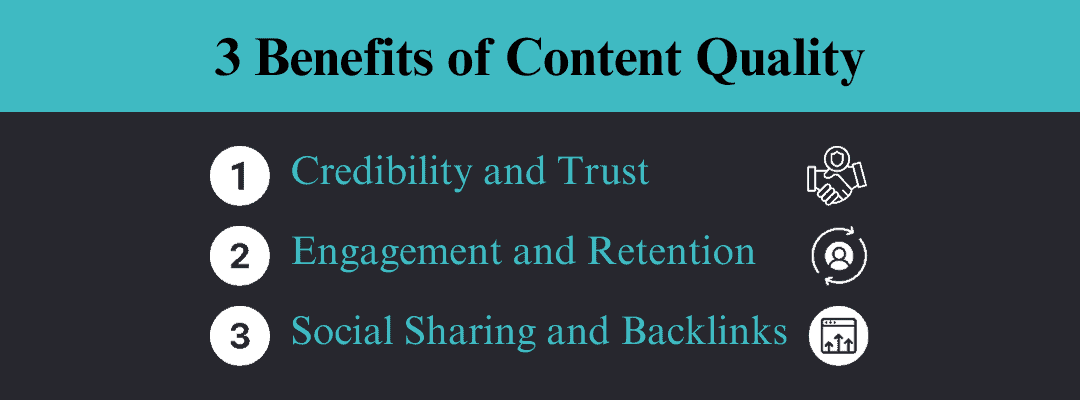
    Top 3 Benefits of Content Quality 

    1. Credibility and Trust

    It sets you apart from competitors and builds credibility. When your content is well-researched, accurate, and error-free, it positions you as an authority in your niche. People are more likely to trust and return to sources they consider credible. This professionalism reflects on your brand and builds trust among your audience.

    2. Engagement and Retention

    It keeps readers or viewers hooked, prompting them to spend more time on your website or platform. Engaged visitors are more likely to explore your content further, increasing the chances of conversion. Thus, by positioning yourself as an industry leader and providing practical knowledge, your content becomes a valuable resource that keeps your audience coming back for more.

    3. Social Sharing and Backlinks

    When your content is valuable, people will share it with their networks. Great pieces of content naturally attract backlinks from other websites. These backlinks are like digital endorsements, indicating to search engines like Google that your content is worth ranking higher. This boosts your SEO (search engine optimization) and enhances your brand’s visibility and recognition in your industry.


    Why is Content Quality Important for Social Media

    Social media marketing platforms thrive on engaging content, acting as catalysts for discussions, encouraging sharing, and fostering the growth of a loyal following. This type of digital marketing is a fundamental component; it plays a pivotal role in determining the success of your brand.

    For example:

    • Company A consistently produces high-quality content that is informative and engaging.
    • On the other hand, Company B focuses on producing a larger content volume but with lower quality.

    Company A’s content is more likely to be shared, liked, and commented on across various platforms such as Facebook, X (Twitter), and Instagram, expanding their reach and improving brand visibility.

    Social media users are selective and can distinguish between average and valuable content. Compelling social media content captures their attention and entices them to click through to your website, where they can access even more valuable content.

    Furthermore, akin to monitoring user engagement on your website, keeping a close eye on social media engagement is equally important. Metrics like likes, shares, comments, and click-through rates offer valuable insights into the impact of your social media content.

    content quality for social media

    The Impact of Content Quality

    In online content, quality is the linchpin that captures and holds your audience’s attention while boosting your search engine rankings. Let’s explore how content quality influences both user engagement and SEO.

    1. Captivating Your Audience

    High-quality content possesses the remarkable ability to captivate your audience. It begins by drawing them in from the very first sentence and continues to keep them scrolling or clicking. It makes your audience say, “I need to read this” or “I have to watch this.” This captivating effect keeps visitors engaged and encourages them to spend more time on your website.

    2. Encouraging Interaction

    Engagement goes hand in hand with quality content. It encourages interaction in various forms, prompting your audience to take action through comments, shares, likes, or even purchases. Furthermore, it enables connection, making your audience more eager to take part and share your content with their networks.

    3. Build Trust

    Trust is the cornerstone of user engagement. When your audience trusts your content, they are more likely to engage with your brand, subscribe to your newsletter, or make a purchase. Building trust takes time, but delivering high-quality content that resonates with your audience will yield significant results.

    4. Improve SEO

    Content quality also plays a pivotal role in your website’s SEO for the following reasons:

    • It provides a better user experience, keeping visitors on your site longer, which leads to lower bounce rates. Reduced bounce rates send positive signals to search engines, which improve your rankings.
    • High-quality content naturally attracts link building. Other websites and content creators want to reference and share valuable content. The more backlinks you earn, the more search engines recognize your authority, enhancing your rankings.
    • In the fiercely competitive world of SEO, quality content has a distinct advantage. Search engines assess the quality of the content by considering factors like readability, keyword optimization, and user-friendliness.

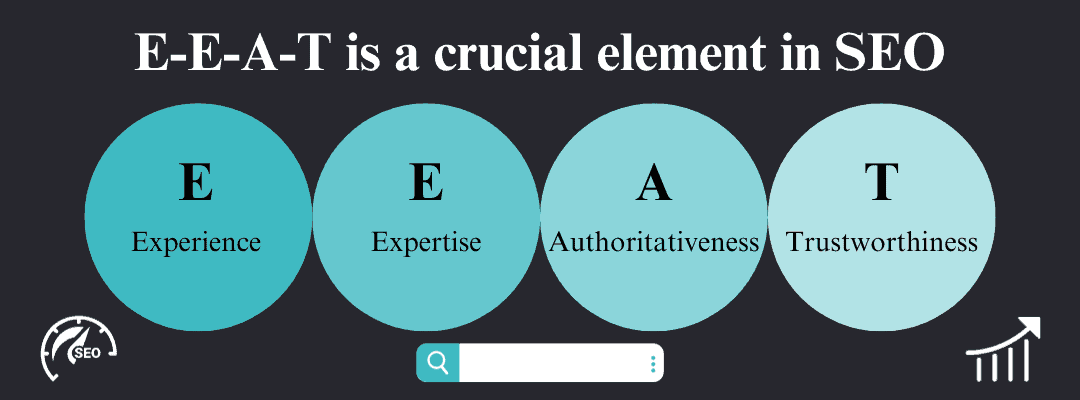
    Moreover, E-E-A-T (Experience, Expertise, Authoritativeness, and Trustworthiness) is a crucial element in SEO. Google, in particular, places great emphasis on E-E-A-T when evaluating web content. These factors are directly aligned with content quality.

    Your pages can climb the SERPs (search engine results pages) when you consistently produce and create quality content. It’s worth noting that the top 3 Google search results get 54.4% of all clicks. That’s more than half, highlighting the significant advantage of high-quality content in improving your search engine rankings.

    E-E-A-T

    Strategies for Improving Content Quality

    To create and optimize content, consider the following strategies:

    1. Thorough Research

    • Dive deep into your niche and understand your audience’s pain points and preferences.
    • Discover valuable keywords for SEO and enhance the quality of your content by basing it on accurate and up-to-date information.

    2. Craft Compelling Headlines

    3. Focus on Quality Writing

    • Invest in excellent writers and editors.
    • Ensure well-structured and error-free content through rigorous proofreading and editing.

    4. Leverage Visual Appeal

    • Incorporate visuals such as infographics, images, and videos to enhance your content.
    • Visual content improves the user experience and attracts more backlinks.

    5. Organize Your Content Plan

    • Create a content calendar to stay organized and ensure a consistent publishing schedule.
    • Regularly audit existing content for improvements and optimization, including updating outdated content and integrating keywords.

    Content quality and SEO should work hand in hand to achieve your online goals. Integrating these strategies into your content marketing will help drive more organic traffic to your website.

    Conclusion: The Vital Role of Content Quality

    In today’s content-saturated digital world, quality reigns supreme. It sets you apart, earns trust, and drives engagement. Prioritizing content quality is not a luxury but a necessity for online success. It’s the bridge that connects your message to your audience.

    In fact, it’s no wonder that in 2023, 53% of marketers and business owners are focusing on improving the quality of their content.

    As you embark on your digital journey, remember this: it’s not about the quantity but the quality. Creating high-quality content is the surest way to stand out and succeed in the digital landscape.

    Are you ready to take your business to the next level? Let Time Out Marketing, the quality content kings, be your guide. Contact us today to explore how our expertise can elevate your content strategy and enhance your online presence so you can reign supreme.

    Are You Ready to Take Time Out?

    Let’s create strategies that deliver real results for your business.

    How to Succeed in the Digital Landscape

    How to Succeed in the Digital Landscape

    Digital Landscape

    Welcome to the realm where the digital landscape isn’t just a backdrop but the canvas where success is painted. Understanding its pivotal role has never been more crucial in this era of rapid technological shifts.

    Moreover, it’s the conduit through which businesses communicate, ideas spread, and innovations shine. Let’s dive into the complexities of this evolving terrain and unlock success in the dynamic world of digital marketing.


    Understanding the Digital Landscape

    Unraveling its complexities within the digital landscape unveils new opportunities and connections. As we explore its core, we delve into its pivotal role and the underlying components that shape the marketing landscape.

    For instance, Amazon illustrates how a deep understanding of the digital landscape can lead to transformative success. Starting as an online bookstore, Amazon’s evolution into a global e-commerce giant demonstrates the power of harnessing digital technologies.

    What is the Role of the Digital Landscape

    Envision the digital landscape as the heartbeat of modern interactions. It’s where big and small businesses converge in this technology-driven era. From websites as digital storefronts to social media marketing for businesses with platforms like Facebook, amplifying messages and success stories are scripted here. Understanding its role is your ticket to an effective marketing strategy.

    What are the Components of the Digital Landscape

    In exploring the digital landscape, it’s essential to understand its foundational components. Peeling back the layers of this digital universe, you’ll find various elements that shape its landscape. Here are some key statistics:
     

      1. Website Explosion: Today, over 1 billion websites exist, showcasing the vastness of the digital landscape.
      2. E-commerce Boom: Global e-commerce sales are forecast to reach $5.18 trillion in 2023, underscoring the significance of online marketplaces.
      3. Social Media Dominance: 59.9 percent of the world’s population uses social media platforms, which are central to digital communication.
      4. Content Proliferation: Over 6 million blog posts are published daily, highlighting content channels’ role in engaging global audiences.
    Digital Landscape 2

    How is the Digital Landscape Changing?

    The digital landscape is in constant motion, evolving with every technological development, shifting consumer behaviors, and emerging trends. Therefore, your branding and strategy should also be on the move.

    Understanding these shifts is crucial. This includes recognizing the importance of SEO in increasing organic traffic and visibility. In this dynamic environment, businesses face the dual challenge of staying agile while addressing data privacy and security. Vital considerations include:

      1. Data Protection: Prioritize robust data protection measures, secure customer data, and employ encryption technologies.
      2. Transparency: Be transparent about data collection, use, and sharing practices to build trust.
      3. Compliance: Stay updated with data privacy regulations like GDPR or CCPA to ensure trust and avoid legal issues.
      4. User Consent: Obtain explicit consent for data collection and processing, giving users control.
      5. Cybersecurity: Invest in cybersecurity to protect against data breaches and cyberattacks.
      6. Ethical Data Practices: Adopt ethical data practices to maintain trust and avoid intrusive collection methods.

      Transformations in the Ever-Evolving Digital World

      Adaptation isn’t just a survival mechanism; it’s the key to flourishing in the ever-shifting digital landscape. As the environment evolves, so do the rules of engagement. Therefore, adaptation isn’t optional; it’s necessary. Furthermore, it extends beyond technology and trends to include ethical practices and social responsibility. Incorporating these principles impacts business success by:
       

        1. Building Trust: Ethical practices like transparent communication, responsible data handling, and fair dealings foster trust.
        2. Enhancing Reputation: Demonstrating responsibility enhances a company’s reputation, attracting customers and partners.
        3. Customer Loyalty: Aligning with ethical values and social causes garners a loyal customer base that connects with your brand.
        4. Attracting Top Talent: Ethical and socially responsible companies are attractive to top talent.
        5. Mitigating Risks: Ethical practices help mitigate legal, financial, and reputational risks.
        6. Long-Term Sustainability: Ethical businesses are more sustainable, weathering crises.
        7. Market Differentiation: Ethical practices set businesses apart in a crowded digital landscape.
        8. Global Impact: Socially responsible companies contribute positively to global challenges.
    Digital Transformation

    Fundamental Shifts in the Dynamic Digital Landscape

    Innovation isn’t just a buzzword; it’s the heartbeat of the digital landscape. A marketing strategy continually evolves as AI and automation redefine marketing; e-commerce reshapes retail, and data insights guide decisions.

    As a result, these shifts are the roadmap to success. They empower businesses through paid advertising options, such as PPC marketing, social media marketing, video marketing, and influencer marketing. Here’s how they help businesses:

    1. Website Explosion: Today, over 1 billion websites exist, showcasing the vastness of the digital landscape.
    2. E-commerce Boom: Global e-commerce sales are forecast to reach $5.18 trillion in 2023, underscoring the significance of online marketplaces.
    3. Social Media Dominance: 59.9 percent of the world’s population uses social media platforms, which are central to digital communication.
    4. Content ProliferationOver 6 million blog posts are published daily, highlighting content channels’ role in engaging global audiences.


    Strategies for Success in the Digital Landscape

    In this ever-evolving digital landscape, success demands mastery and adaptability. One cornerstone strategy is effectively utilizing CRM (Customer Relationship Management) systems to manage customer relationships and improve their web experience with your site. They play a pivotal role in maintaining and nurturing customer relationships. Key benefits include: 


    1. 360-degree Customer View: CRM systems consolidate customer data for personalized interactions.
    2. Personalization: Tailor communications based on individual customer behaviors and preferences.
    3. Targeted Marketing: Segment the customer base for targeted campaigns to drive traffic to your site and enhance contact with potential customers.
    4. Automation and Efficiency: CRM systems automate real-time tasks, improving efficiency.
    5. Customer Support and Retention: Efficient customer support enhances satisfaction and retention.
    6. Data-Driven Decision-Making: CRM systems offer valuable insights through analytics.
    7. Scalability: CRM systems can scale with business growth to support your expanding services.
    8. Integration: CRM systems integrate digital tools like email marketing and e-commerce for a seamless ecosystem.
    CRM strategy

    The Role of High-Quality Content

    Unlocking success involves producing high-quality content. High-quality content marketing is a beacon and bridge in this dynamic digital terrain. It captivates audiences, establishes authority, improves search engine rankings, and contributes in part to overall success.

    The Significance of Mobile Responsiveness

    In today’s mobile-centric world, mobile responsiveness is imperative. It enhances user experience, improves search engine rankings, broadens audience reach, reduces bounce rates, provides a competitive edge, captures local and mobile searches, and boosts e-commerce.

    Harnessing Change and Expertise for Digital Success

    Thriving isn’t merely about survival; it’s about harnessing change. Adaptation and expertise are indispensable. Understanding mobile responsiveness is crucial for digital success. So, combining ‘staying current’ with ‘mastering your domain’ is vital to ensure your digital presence remains relevant and competitive.


    Conclusion: Your Path to Success

    As our journey through the digital landscape ends, remember that unlocking success is not a distant dream but a tangible reality within your reach. With insights into its evolution and understanding of its components, you can improve your marketing strategy, increase your online presence, and conquer the internet.

    The digital marketing landscape may be vast, and its contours are ever-changing. Still, with unwavering confidence and the right strategies, you can navigate its twists and turns and emerge as a company that provides important services and top products to people of all ages. Thereby becoming a triumphant navigator amongst your team.

    Ready to embark on your journey to success? Take time out and contact us today to explore how our services can help you navigate the digital landscape and achieve your marketing goals.

    Are You Ready to Take Time Out?

    Let’s create strategies that deliver real results for your business.