Why Your Website Needs to Be a Conversion Engine

Why Your Website Needs to Be a Conversion Engine

Website Conversion

For years, businesses were told that their websites were their shopfronts. This view made sense for website conversion because people would search, click on your site, browse the pages, and decide whether to engage with your business based on what they saw.

However, that’s no longer the case. Search behavior has changed, SEO has evolved, and AI now plays a significant role in how people find, assess, and decide.

Consequently, your website is no longer just about making a first impression; it’s now the final step before a decision. This shift means that website conversion should be the goal of your entire digital strategy.


The Shift: From Discovery to Decision

Let’s start with what’s actually happening today. Users are no longer just typing keywords into search engines (such as Google or Bing) and browsing pages and clicking through. Instead, they are:

  • Asking AI tools for direct answers
  • Getting summarized insights without leaving the search page
  • Comparing multiple options instantly
  • Building trust before they even visit a site

This is known as zero-click behavior, and it’s becoming more common.

By the time someone lands on your website, they’re not starting from scratch. They already have context, options, and, most importantly, intent. Therefore, your website has one primary job: to turn that intent into action.

Website shopfront

Why the Shopfront Mentality Is Outdated

Thinking of your website as a shopfront suggests people are casually browsing, discovering you, and stepping inside out of curiosity. But that’s not how digital journeys work anymore. Audiences today are:

  • Pre-informed
  • Pre-qualified
  • Often pre-sold

They’re not browsing randomly; they’re evaluating. So, when they land on your site now, they’re asking:

  • Is this the right fit for me?
  • Can I trust this business?
  • What do I do next?

If your site doesn’t answer those questions quickly and clearly, visitors won’t stick around, resulting in higher bounce rates, lower engagement, and lost conversion opportunities.


Why Website Conversion Matters More Than Ever

This is where the idea of a conversion engine becomes important. Instead of serving as a static online presence, your website should function as a system designed to:

  • Capture attention immediately
  • Communicate value clearly
  • Build trust quickly
  • Guide users toward action

It’s not about looking impressive; it’s about performance. And in today’s digital landscape, performance means generating real business outcomes.

How AI has changed search

How AI Has Changed the Game

AI isn’t just a trend; it’s reshaping how people search and interact with information. Users can now:

  • Ask detailed questions and get instant answers
  • Receive curated recommendations
  • Narrow down their options in seconds

This results in fewer clicks but much higher intent. So when someone finally lands on your site, they’re much closer to a decision than before. This is a critical moment, and your website needs to meet it with clarity, confidence, and relevance.


Why Most Websites Fail to Convert

Despite these changes, many websites are still built on outdated principles. Here’s where they typically fall short:

Lack of Clear Messaging

Visitors shouldn’t have to figure out what you do. If your value isn’t immediately clear, attention is quickly lost.

Weak or Hidden Offers

Too many websites bury their services or force users to dig for information. In a fast-paced digital world, this creates friction and kills momentum.

No Defined User Journey

Without a clear path, users are left to navigate on their own, and most users won’t take one.

Design Over Function

A visually appealing site is great, but not at the expense of usability and conversions. Looks don’t convert, structure does.

Lack of Trust Signals

Users expect proof before they act. Testimonials, case studies, and results are essential, not optional.

What a High-Converting Website Needs Today

If your website is going to function like a true conversion engine, it needs to deliver:

Immediate Clarity

Visitors should immediately understand:

  • What you do
  • Who it’s for
  • Why it matters

No fluff. No confusion.

Strong, Visible Calls to Action

Whether it’s “Book a Call,” “Get a Quote,” or “Enquire Now,” your CTA should be:

  • Easy to find
  • Clearly worded
  • Strategically placed

Don’t make users search for the next step.

Structured User Flow

Every page should lead somewhere meaningful:

  • An enquiry
  • A booking
  • A purchase
  • A conversation

Think of your website as a guided journey, not just a collection of pages.

Trust and Credibility

Users need reassurance before they act. Trust signals should include:

  • Client testimonials
  • Case studies
  • Proven results
  • Industry experience

These elements reduce hesitation and build confidence.

Mobile-First Performance

Most users will visit your website on mobile. If your site is slow, clunky, or difficult to navigate, you’ve already lost them, regardless of how good it looks.

Is SEO Still Relevant in the Age of AI

Is SEO Still Relevant in the Age of AI?

There’s a common misconception that AI is killing SEO. It’s not, but it is changing what effective SEO looks like.

Today, SEO is no longer just about rankings. It’s about visibility, authority, performance, and conversion. It focuses on:

SEO and website conversion now work together. Ranking means very little if your website doesn’t turn that visibility into action.


Traffic Alone Isn’t the Goal Anymore

Many companies still focus primarily on traffic data and metrics: increasing visitors, clicks, and impressions. However, traffic alone is meaningless without conversions. It often results in low conversion rates, even when visibility looks strong on paper. What truly matters is:

  • Leads
  • Enquiries
  • Sales
  • Bookings

In other words, outcomes. And those outcomes are driven by how well your website performs once someone lands on it.

Is Your Website Ready to Convert Visitors Into Business

Is Your Website Ready to Convert Visitors Into Business?

Your website isn’t your shopfront anymore; it’s your conversion engine and your closing tool. It’s where decisions are made, trust is confirmed, and action is taken. If it’s not driving consistent business, you’re not just underperforming; you’re losing ready-to-buy customers.

In today’s AI-driven search and changing user behavior, simply having a website isn’t enough. It needs to guide, convert, and support decision-making at every step. If your website isn’t converting traffic into inquiries, leads, or sales, it’s not a traffic problem; it’s a performance problem.


Ready to Turn Your Website into a Conversion Engine?

At Time Out Marketing, we help businesses turn underperforming websites and landing pages into high-converting digital assets built for today’s AI-driven search behavior and real user intent.

Whether it’s a full rebuild or performance optimization, we’ll identify what’s holding your site back and improve what isn’t working. Contact us today and start turning your traffic into real business results.

FAQs

What is a website conversion engine?

A website conversion engine is a strategic approach that uses your website to convert visitors into leads, inquiries, or sales. Instead of acting as a digital brochure, it serves as a system that guides users to take action through clear messaging, structured user journeys, and strong calls to action.

Why is website conversion more important than traffic today?

Traffic alone doesn’t guarantee business results. In many cases, users arrive with intent already formed due to AI tools and search summaries. Because of this, the real value comes from how well your website converts that traffic into inquiries, leads, or sales.

How has AI changed website conversion?

AI has changed user behavior by reducing the number of clicks needed to get information. Users now receive direct answers, comparisons, and recommendations before visiting a website. This means visitors arrive more informed and closer to making a decision, making conversion performance more important than ever.

What makes a high-converting website?

A high-converting website is built around clarity, structure, and trust. It should clearly explain what you do, guide users through a simple journey, include strong calls to action, and provide trust signals such as testimonials, case studies, and proven results.

Why do most websites fail to convert visitors?

Most websites fail because they rely on outdated design and messaging principles. Common issues include unclear messaging, hidden offers and services, lack of user direction, design over function, and weak trust signals. These issues create friction and reduce conversions.

What is a good website conversion rate?

A good website conversion rate depends on the industry, but in general, it reflects how effectively your website turns visitors into leads or customers. Even with high traffic, poor conversion rates indicate that the website is not structured effectively to align with user intent or decision-making.

Is SEO still important with AI search?

Yes, SEO is still essential, but it has evolved. Modern SEO focuses on high-quality content, structured information, authority signals, and aligning with user intent. SEO now works alongside conversion optimization, meaning ranking well is only valuable if your website converts that traffic.

What is the difference between traffic and conversions?

Traffic refers to the number of visitors coming to your website, while conversions refer to the actions those visitors take, such as inquiries, bookings, or purchases. A successful website focuses on both visibility and performance, but prioritizes conversions as the real measure of success.

How can I improve my website conversion rate?

Improving conversion rates involves improving clarity, simplifying user journeys, strengthening calls to action, and building trust. It also includes ensuring your website is fast, mobile-friendly, and structured to guide users seamlessly toward specific actions.

Do landing pages improve website conversion?

Yes, landing pages can significantly improve conversion rates by focusing on a single goal or offer. Unlike general website pages, landing pages remove distractions and guide users toward one clear action, making them highly effective for campaigns and targeted traffic.

Why is my website getting traffic but no inquiries?

This usually indicates a conversion problem rather than a traffic problem. If users arrive but do not take action, it often means the messaging is unclear, the offer is not compelling, the user journey is confusing, or trust signals are missing.

How does Time Out Marketing improve website conversion?

Time Out Marketing helps businesses transform underperforming websites and landing pages into high-converting digital assets. This includes improving messaging, structure, user experience, and alignment with modern AI-driven search behavior to turn traffic into real business results.

Are You Ready to Take Time Out?

Let’s create strategies that deliver real results for your business.

SEO vs AEO vs GEO vs AIO: The New Era of Search Explained

SEO vs AEO vs GEO vs AIO: The New Era of Search Explained

SEO vs AEO vs GEO vs AIO
SEO vs AEO vs GEO vs AIO is the new frontier in search. If you’ve been relying solely on traditional SEO to get your website seen, it’s time to rethink your approach. Today, businesses need to understand not just SEO, but also AEO, GEO, and AIO to stay visible and relevant.

In this blog, we’ll break down what each term means, how they differ, and how you can integrate all four strategies into your marketing to future-proof your online presence.


SEO: The Foundation of Search

Search Engine Optimization (SEO) has been the cornerstone of digital marketing for years. At its core, SEO is about improving your website to rank higher in search engines like Google. This involves a combination of:

  • Keyword Research: Identifying the search terms your audience is using to find content, products, or services like yours, and targeting them strategically.
  • On-page SEO: Optimizing your content, headings, and meta tags so search engines understand what your page is about.
  • Off-page SEO: Building backlinks and improving your website’s authority through other reputable sites.
  • Technical SEO: Ensuring your site is fast, mobile-friendly, secure, and easy for search engines to crawl.

SEO remains essential, but it’s no longer the whole picture. The rise of AI-driven search and answer engines means businesses must also focus on how their content is understood and presented by intelligent systems, not just on optimizing for search rankings.

Featured Snippets, voice search, AI chat responses

AEO: Optimizing for Direct Answers

As search evolves, users are increasingly turning to platforms that provide direct answers rather than lists of links. This is where Answer Engine Optimization (AEO) comes in.

AEO focuses on optimizing your content so that AI and search engines can deliver direct answers to users. Examples include Google’s Featured Snippets, voice search, or AI chat responses.

How AEO Works

While SEO aims to improve your ranking on search engine results pages (SERPs), AEO focuses on matching content to user intent and getting it featured as the direct answer in search. This requires a different approach:

  • Structuring content to answer specific questions clearly and concisely.
  • Using FAQs, headings, and schema markup to help AI understand your content.
  • Writing in a conversational tone that aligns with how people ask questions.

Example: If someone asks, “What is AEO?” your goal is for your content to appear at the top as a featured answer, not just as a ranked link.

AEO is becoming essential as AI-driven search continues to grow, providing users with immediate, trustworthy answers tailored to their search intent, without requiring them to click through multiple sites.

Generative Engine Optimization (GEO)

GEO: Getting Noticed in AI Recommendations

Generative AI is changing how content is discovered and consumed. Generative Engine Optimization (GEO) focuses on ensuring your content is optimized for AI tools that generate responses, summaries, and recommendations.

Where SEO and AEO focus on search visibility, GEO is about being included in AI-generated outputs. For example, when ChatGPT, Gemini, or other AI tools summarize, recommend, or create content based on multiple sources.

How GEO Works

GEO is all about context, relevance, and structure:

  • Content should be clear, authoritative, and well-structured.
  • Use headings, bullet points, and concise language to make your content AI-friendly.
  • Include relevant context that AI can understand and reference accurately.

Example: A well-structured blog with clear headings, bullet points, and detailed explanations is more likely to be used as a source for AI-generated summaries, answers, or recommendation lists.


AIO: Future-Proofing Your Search Visibility

Finally, we have AI Optimization (AIO), the most holistic approach. AIO combines elements of SEO, AEO, and GEO but focuses on how AI interprets, ranks, and presents your content across platforms.

AIO is about more than visibility; it’s about ensuring AI can understand your content’s purpose, authority, and relevance, including signals like branded SEO performance and brand mentions online. This helps your content appear in AI-first search experiences, including:

  • AI-powered search engines
  • Voice assistants
  • AI chatbots and virtual assistants

How AIO Works

AIO ensures your content is not just visible, but also understood, interpreted, and recommended by AI platforms. It focuses on structuring content so AI can quickly grasp its purpose, authority, and relevance, helping your pages appear in AI search, voice assistants, and chatbots.

Here’s how to put AIO into practice:

  • Make your content structured and scannable, using headings, bullet points, and clear language.
  • Optimize for user intent and engagement, not just keywords.
  • Include contextual information and examples to help AI accurately interpret your content.

Businesses that ignore AIO risk becoming invisible to users relying on AI-first discovery tools.

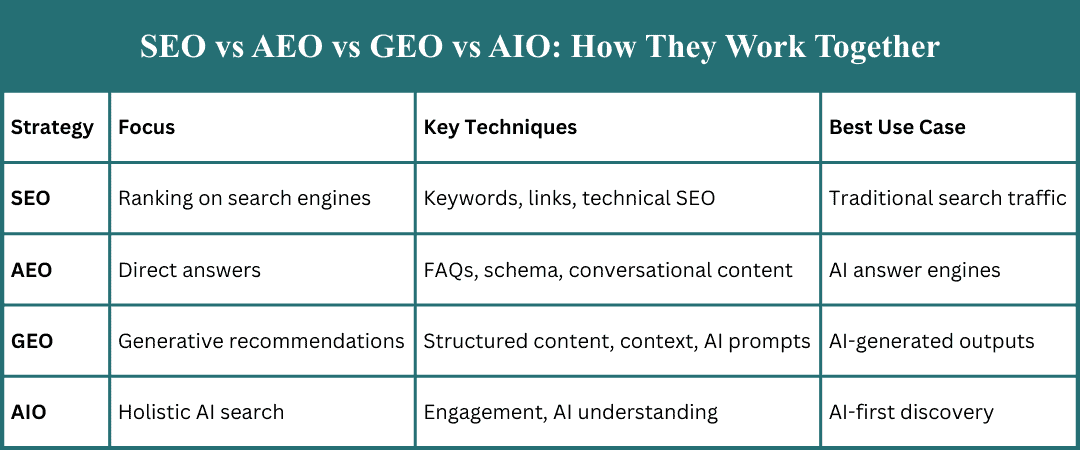
SEO vs AEO vs GEO vs AIO: How They Work Together

Each approach has its strengths, but the most effective strategy combines all four. Here’s a quick comparison:

Strategy Focus Key Techniques Best Use Case
SEO Ranking on search engines Keywords, links, technical SEO Traditional search traffic
AEO Direct answers FAQs, schema, conversational content AI answer engines
GEO Generative recommendations Structured content, context, AI prompts AI-generated outputs
AIO Holistic AI search Engagement, AI understanding AI-first discovery

By integrating SEO, AEO, GEO, and AIO, your becomes more discoverable, understandable, and shareable across both traditional and AI-driven search platforms.

SEO vs AEO vs GEO vs AIO How They Work Together

Seeing SEO, AEO, GEO, and AIO in Action

Here’s a snapshot of a new website that integrated SEO, AEO, GEO, and AIO strategies from the start. These metrics reflect just one month of activity:

  • Site Sessions: 344
  • User Queries on AI: 5,139
  • Unique Visitors: 309
  • Page Views: 612
  • Post Views: 301
  • Clicks to Contact: 11

By building these strategies into the site from day one, the business was able to maximize AI-driven visibility and engagement from the outset. Notice how AI queries vastly outnumber traditional SEO sessions, demonstrating that even a new website can reach audiences through AI-driven search and recommendations long before organic traffic fully ramps up.

Key Takeaways:

  • Early integration of AEO, GEO, and AIO exposes content to entirely new AI-driven audiences.
  • Structured, AI-friendly content increases page and post views while encouraging meaningful interactions.
  • Even small numbers of clicks to contact can translate into valuable leads when AI amplifies reach.

This example demonstrates how integrating AI-driven optimizations (AEO, GEO, AIO) with traditional SEO doesn’t just improve rankings, it improves discoverability, referral traffic, AI mentions, and conversions.

Practical Tips for SEO, AEO, GEO, and AIO

Practical Tips for SEO, AEO, GEO, and AIO in 2026

After seeing the potential impact, here are practical steps you can take to optimize your content and website for 2026:

  1. Audit your current content for AEO and GEO readiness. Are questions clearly answered? Is your content structured?
  2. Implement structured data and FAQ sections to improve AI understanding.
  3. Create AI-friendly content that anticipates how users ask questions.
  4. Focus on user intent and context, not just keywords.
  5. Monitor and test performance across both traditional search and AI-driven platforms to refine your strategy.

Even small adjustments can significantly increase your visibility in AI-driven search results and give your business a competitive edge.


Is Traditional SEO Dead?

No, SEO isn’t dead. It’s evolving. In today’s search landscape, traditional SEO remains a foundation, but it’s now part of a bigger beast that includes AEO, GEO, and AIO. Together, these strategies ensure your content is visible, understood, and recommended across AI-driven platforms and traditional search engines.

By combining these approaches, you can future-proof your search strategy and reach more users wherever they search, including on Google, AI answer engines, and generative AI recommendations.

Don’t wait until your competitors leave you behind. Start integrating SEO, AEO, GEO, and AIO into your marketing strategy today. Contact us for expert guidance to stay ahead in 2026 and beyond. 


FAQs: SEO vs AEO vs GEO vs AIO

What is the difference between SEO and AEO?

SEO focuses on ranking in search results, while AEO focuses on structuring content so it can be pulled as a direct answer in featured snippets, voice search, and AI results.

What is GEO (Generative Engine Optimization)?

GEO is the process of optimizing content to increase its likelihood of being referenced or recommended by generative AI platforms, including ChatGPT, Google AI Overviews, and other AI search tools.

What does AIO mean in marketing?

AIO stands for AI Optimization. It refers to optimizing your content and website for AI-driven search experiences, in which AI tools interpret and recommend content rather than relying solely on keyword rankings.

Is SEO still worth it in 2026?

Yes. SEO remains essential, but it must be supported by AEO, GEO, and AIO strategies to remain competitive in today’s search environment.

How do I optimize my website for AI search?

To optimize for AI search, focus on structured content, clear headings, FAQ sections, schema markup, strong topical authority, and content that answers questions directly.

Does schema markup help with AI visibility?

Yes. Schema markup helps search engines and AI tools better understand your content, increasing the likelihood of appearing in featured snippets, AI summaries, and answer-based search results.

What type of content performs best for AEO and GEO?

Content that performs best includes FAQs, how-to guides, definitions, comparisons, and structured educational articles that clearly answer specific user questions.

Can small businesses benefit from GEO and AIO?

Absolutely. GEO and AIO help small businesses appear in AI-driven recommendations, which can drive traffic and leads even without competing directly against major brands in traditional SEO.

Are You Ready to Take Time Out?

Let’s create strategies that deliver real results for your business.

Digital Marketing for Small Businesses in 2026

Digital Marketing for Small Businesses in 2026

Digital Marketing for Small Businesses

Digital marketing for small businesses is evolving rapidly, and 2026 promises to be a pivotal year. From AI-powered tools to shifts in search behavior and social media, small business owners can no longer rely on the same old tactics. Adapting early is not just a smart move; it’s essential for staying competitive.

Whether you’re new to digital marketing or ready to take your strategy to the next level, in this blog, you’ll find clear, practical advice to help your business thrive in 2026.


What Is Digital Marketing for Small Businesses?

Digital marketing is any strategy that uses online channels to connect with your audience, promote your products or services, and drive measurable results. For growing businesses, digital marketing levels the playing field, allowing you to compete with larger brands without massive budgets.

Common digital marketing channels include:

  • Social media platforms like Instagram, Facebook, LinkedIn, and TikTok
  • Email marketing to nurture leads and drive repeat business
  • Search engine optimization (SEO) to make your website more visible
  • Paid ads on Google, Meta, or other platforms
  • Content marketing, including blogs, videos, and guides

In 2026, small businesses need to embrace these channels strategically, integrating creativity with data-driven decisions to reach customers effectively.

Digital Marketing Trends

6 Digital Marketing Trends Every Small Business Should Know

Understanding the trends shaping 2026 will give your business a head start. Here are six trends to watch out for:

1.      AI Tools Make Marketing Easier

Artificial intelligence is no longer just hype; it’s becoming a standard tool across all industries. AI can assist you with content creation, email campaigns, and even customer service through chatbots.

The benefits are clear: save time, target the right audience, and scale your marketing without hiring an army. Tools like ChatGPT, Jasper, and Canva AI make it easier than ever to create professional content quickly.

2.      Search Is Changing

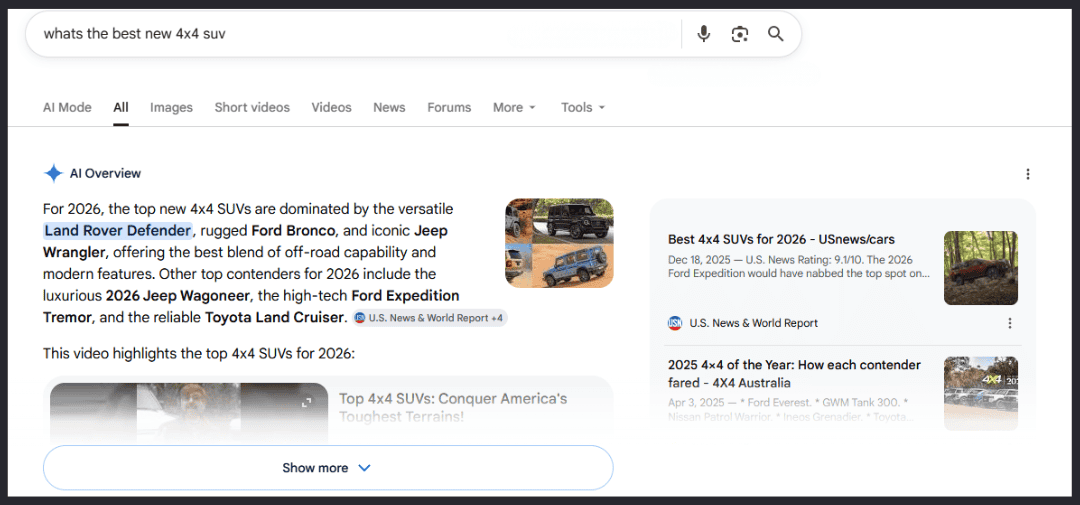
Search engines are changing. Google’s AI Overview, snippets, and zero-click results often provide answers without requiring users to visit your website. Search engines are also placing greater emphasis on verification.

AI assistants increasingly favor credible, well-structured content with trustworthy citations. This means small businesses that publish clear, accurate information are more likely to appear in both AI-generated answers and traditional search results.

That makes local SEO more important than ever. Optimizing your Google Business Profile, including local keywords and structured data, can help your business appear in featured snippets and map search results. Mastering local SEO will capture customers right when they need you.

3.      Social Media Drives Sales

Social media is no longer just for branding; it’s a direct sales channel. Short-form content such as TikTok videos, Instagram Reels, and YouTube Shorts is driving engagement. Social commerce enables customers to buy products directly on these platforms, making it easier for small businesses to drive sales without expensive advertising.

Encouraging user-generated content (UGC) such as reviews, photos, or testimonials can boost authenticity and engagement, helping your brand connect with your community.

The key is to balance engagement with conversion. Focus on building a community, showcasing products authentically, and using low-budget creative strategies to compete with bigger brands.

4.      Paid Ads Require Smarter Strategy

Paid advertising isn’t going away, but it’s getting more competitive. CPCs (Cost-Per-Click) and CPMs (Cost Per Mille) are rising, making smarter targeting essential. Focus on creative first-ads, retargeting, and audience segmentation to improve ROI (return on investment).

Platforms like Google, Meta, and LinkedIn Ads offer powerful tools, but success in 2026 will depend on strategy and precise audience understanding.

5.      Email and First-Party Data Are Vital

With the death of third-party cookies, businesses must own their customer data. Email marketing remains one of the highest ROI channels, especially when combined with segmentation, personalization, and automated workflows.

Small businesses that invest in first-party data now will be ahead of the curve, able to target customers more effectively and build stronger relationships over time.

6.      Websites Must Be Fast and Simple

Your website is more important than ever. Page speed, Core Web Vitals, and mobile-first design will dominate. Users expect fast, intuitive experiences, and a slow or cluttered website can drive them straight to a competitor.

Focus on simple navigation, clear calls to action, and conversion-focused design. In 2026, functionality and user experience will always outweigh flashy visuals.

Key Digital Marketing Strategies

Key Digital Marketing Strategies & Rules for Small Businesses

Trends are important, but you also need actionable strategies and proven rules to guide your marketing efforts. Here’s how to combine them effectively:
 

The 70/20/10 Rule in Digital Marketing

  • 70% evergreen content: 70% of your content should focus on evergreen materials that educate or solve customer problems. For example, how-to guides or industry tips.
  • 20% experiments: 20% should experiment with new formats like short-form videos or interactive polls.
  • 10% innovative/high-risk marketing: 10% should be bold, high-risk campaigns that aim to create buzz.

Applying this rule helps balance consistency with innovation while avoiding wasted effort. Track which content types perform best, then adjust your 70/20/10 distribution quarterly.
 

The 3-3-3 Rule in Marketing

This simple rule can guide campaign structure: 3 messages, 3 channels, 3 exposures per customer.

Example: A lighting company could send 3 educational posts about the benefits of their product across Instagram, email, and TikTok, repeating key messages three times over three weeks:

  • Energy Efficiency Awareness: By sharing educational posts, the company can highlight how its lighting products help reduce energy consumption, leading to a smaller environmental footprint.
  • Cost Savings: The campaign can inform customers about the long-term financial benefits of switching to energy-efficient lighting, such as lower electricity bills and reduced maintenance costs.
  • Enhanced Product Value: Repeating key messages across multiple channels reinforces the value proposition, helping customers understand features like improved lighting quality, durability, and smart technology integration.

This ensures your message is reinforced without overwhelming your customer base. Repeated exposure can increase brand recall, helping your business stay top of mind with potential customers. Use this rule across social media, email campaigns, and paid advertisements.

The 7 Times 7 Rule in Marketing

Customers typically need seven interactions with your brand before converting. This means customers often need to see a message seven times before taking action. Planning content and campaigns to meet this threshold improves brand recall and conversion rates.

Example: A local cafe might combine social media posts, email reminders, Google ads, and loyalty messages to reach the 7-interaction mark. This approach helps small businesses plan multi-channel campaigns more effectively, ensuring they maximize touchpoints without overwhelming their audience.
 

The 50/30/20 Rule in Content Marketing

The 50/30/20 Rule is a practical guideline for balancing your content across different goals. It helps small businesses create a mix that engages their customers while still driving results:

  • 50% Educational Content: Focus on teaching, solving problems, or providing value to your readers. Examples include guides, tips, tutorials, or industry insights.
  • 30% Conversion-Focused Content: Encourage your prospects to take action: contact you, sign up for a newsletter, or inquire about a service.
  • 20% Brand Storytelling / Awareness Content: Share your brand story, customer experiences, or behind-the-scenes content to build trust and long-term relationships.

Think of this as a rule of thumb, not a strict formula. Depending on your audience or platform, you might adjust the percentages slightly.

Example: A real estate agency could publish educational articles on the home-buying and selling process (50%), feature current property listings with direct inquiry links (30%), and share client testimonials or stories about local neighborhoods (20%).

This rule helps small businesses balance value, promotion, and engagement without overwhelming their community. As explained in our Content Marketing Guide, companies that publish content consistently are far more likely to build trust, improve visibility, and generate steady inbound leads compared to those posting irregularly.

Digital Marketing Action plan

Action Plan: The 7 Steps to Implement in 2026


1.      Clarify your ideal customer

Define demographics, behaviors, and needs using surveys, social listening, and CRM data. A clear understanding of your audience improves targeting and messaging. 

2.      Build a fast, trustworthy website

Make UX, mobile-first design, and page speed a priority so your website works for your customers. Ensure easy navigation and a smooth checkout or contact process. 

3.      Produce helpful, search-optimized content

Create blogs, videos, and guides that answer your audience’s questions, allowing them to find information about your services and learn for free. Focus on long-tail keywords and content that addresses real customer needs. 

4.      Use social media strategically

Balance engagement and sales. Focus on platforms where your audience is most active and tailor content to each channel. Incorporating UGC into your content strategy can strengthen trust and social proof while keeping content fresh and relatable.

5.      Create always-on email automations

Nurture leads and drive repeat purchases with welcome series, abandoned cart sequences, and upsell campaigns. 

6.      Invest in paid ads smartly

Run targeted, creative-first campaigns. Retarget high-intent visitors and test ad creatives regularly to maximize results. 

7.      Track your data and adjust monthly

Monitor key performance indicators (KPIs) across all channels, then use insights to refine strategies, optimize campaigns, and improve overall performance.

Measuring success

Measuring Success & Knowing If It Works

For small businesses, it’s essential to use clear metrics to evaluate the effectiveness of digital marketing efforts. The following KPIs can help measure progress and determine what’s working:

Website Traffic

Track website visits, session duration, and bounce rate using tools like Google Analytics. For example, a house-and-land specialist saw a 60% increase in traffic after focusing on local search optimization and consistently posting regular blog content.

Lead Generation

Monitor form submissions, downloads, and newsletter sign-ups to gauge lead generation. Use platforms like HubSpot or Mailchimp to track performance over time and identify trends.

Social Media Engagement

Measure likes, shares, comments, and video completion rates to assess audience interaction. Short videos typically perform far better than static posts, with one-minute clips often retaining approximately 70% of viewers through to the end.

Email Marketing

Evaluate open rates, click-through rates, and conversion rates. Segmenting your audience can significantly improve performance; segmented campaigns have been shown to generate up to 760% more revenue than non-segmented campaigns.

Paid Ads Performance

Track cost per click (CPC), click-through rate (CTR), and return on ad spend (ROAS) for paid advertising efforts. Continuously adjust targeting, ad creative, and copy to maximize return on investment.

Regular Reporting and Benchmarking

Conduct monthly or biweekly reports to pivot strategies as needed quickly. Compare results to industry benchmarks to identify opportunities for improvement. Consistent review and adjustment will help maintain effectiveness and cost efficiency.


Maximize Your Marketing Impact

Digital marketing gives small businesses of any size the tools to grow smarter, not harder. Focus on consistent, targeted efforts that reach the right audience, build trust, and drive real engagement.

Plan carefully, measure your results, and adapt along the way. Start early to gain an edge over competitors and see meaningful results faster, without overextending your resources.

Need help making digital marketing work for your business? Time Out Marketing can guide you to real growth in 2026 and beyond. Contact us today to start driving your dollar further!

FAQs

What is digital marketing for small businesses?

Digital marketing uses social media, email, SEO, paid ads, and content to reach customers and grow your business. Adding credible citations and user-generated content (UGC) boosts trust and engagement.

Why is digital marketing important for small businesses in 2026?

In 2026, AI tools, evolving search behavior, and social commerce make digital marketing essential. Verification-focused search engines reward accurate, well-cited content, helping small businesses compete efficiently.

How can small businesses improve local search results?

Optimize your Google Business Profile, use local keywords, add structured data, and gather positive reviews. Well-cited content increases visibility in maps, featured snippets, and AI-generated search results.

What are the best content strategies for small businesses?

Focus on consistent, high-value content that educates, converts, and tells your brand story. Incorporating UGC and credible citations strengthens authority and audience engagement.

How should small businesses track digital marketing success?

Measure KPIs like website traffic, lead generation, social media engagement, email open rates, and ROI from paid ads. Regular reporting ensures campaigns are optimized and resources are used effectively.

Can small businesses implement these strategies without a big budget?

Yes. Use free tools, organic social media, SEO, AI-powered content, and low-cost experiments. Consistency and leveraging UGC can deliver measurable growth without large investments.

Are You Ready to Take Time Out?

Let’s create strategies that deliver real results for your business.

The Rise of AI vs Human Creativity: Who Wins?

The Rise of AI vs Human Creativity: Who Wins?

The Rise of AI

Artificial intelligence (AI) is everywhere. From chatbots and image generators to automated content creation tools, AI technology is transforming industries at a rapid pace. But as AI grows more capable, a key question emerges: How does it measure up against human creativity?

In this blog, we explore the rise of AI in content creation and marketing, its strengths and limitations, and why human input remains vital. By the end, you’ll understand how to leverage AI effectively without losing the human touch that drives engagement, trust, and results.


What Started the Rise of AI?

The rise of AI didn’t appear overnight. Its roots stretch back to the mid-20th century, when computer scientists began exploring the science behind whether machines could mimic reasoning. Early breakthroughs in machine learning and natural language processing (NLP), such as the 1960s chatbot ELIZA, demonstrated that computers could understand and respond to language in new ways. Although limited at the time, it laid the foundation for future AI developments.

Progress was slow for decades, constrained by limited computing power and scarce access to large datasets. As neural networks developed and advanced algorithms became more sophisticated, AI gradually moved from theoretical experiments into practical research.

These foundational advances set the stage for today’s rapid development of AI, making it a game-changer for marketers and content creators.

Why Is AI Suddenly Booming

Why Is AI Suddenly Booming?

After decades of gradual progress, AI is now experiencing explosive growth. Several factors explain this sudden boom:

  1. Accessible Tools: Modern AI platforms like ChatGPT, DALL·E, and other deep learning models are available to businesses of all sizes. You no longer need a team of data scientists to experiment.
  2. Cloud Computing: Powerful cloud infrastructure allows AI models to process massive datasets at unprecedented speeds.
  3. Data Availability: With more digital data than ever before across the online world, AI systems can learn patterns and produce outputs that feel increasingly human-like.
  4. Rapid Innovation: AI companies continuously improve their models, making them faster, smarter, and easier to use.

Therefore, AI is booming because it promises speed, scalability, and efficiency, qualities that every business wants. But is that enough?


What AI Can Do

So, is speed, scalability, and efficiency really enough? AI excels at processing existing information and generating outputs based on patterns, making it a supercharged research and drafting assistant. Its key strengths include:

  • Content Generation: Text, blog posts, product descriptions, ad copy, and even SEO-friendly drafts can be created in seconds.
  • Data-Driven Insights: AI can analyze customer behavior, predict trends, and recommend strategies with incredible accuracy, including insights from search behavior, leveraging recognition patterns in data.
  • Automation: From scheduling emails to managing social posts, AI saves time and reduces human error.
  • Personalization: AI-driven algorithms allow businesses to tailor content and campaigns to specific audiences, boosting engagement and user experience.

These capabilities make AI an invaluable tool for marketers, particularly in terms of efficiency and scalability. However, while AI can accomplish a great deal, it still relies on humans to ensure quality, creativity, and strategic impact.

AI is like a racing car

What is the 30% Rule in AI?

A practical rule of thumb in AI-assisted content creation is the “30% rule.” It suggests that AI can autonomously handle roughly 30% of content production, while the remaining 70% requires human input, oversight, and creativity.

“AI is like a racing car: powerful, fast, and full of potential, but it’s only as good as the driver behind the wheel.”

This analogy highlights the key truth behind the 30/70 split: AI can draft, suggest, or scale content, but humans must review, refine, and inject originality. Without human guidance, AI-generated content risks being generic, off-brand, or factually inaccurate; a perfect segue into why humans remain essential.


What Humans Bring to the Table

While AI can analyze data and identify patterns, humans possess qualities machines cannot replicate:

  • Creativity: Fresh ideas, storytelling, and big-picture thinking are uniquely human traits.
  • Emotional Connection: Audiences respond to authenticity, empathy, and tone qualities AI can mimic but never truly feel.
  • Critical Thinking: Humans can evaluate context, cultural nuances, and ethical implications in ways AI cannot.
  • Brand Voice: Every brand has a personality. AI can follow style guides, but humans bring them to life.

In short, AI improves efficiency, but humans drive vision, strategy, and emotional connection. For marketers, this means utilizing AI to automate repetitive tasks, allowing human energy to focus on storytelling, strategy, and brand voice. These skills are non-negotiable; without them, content risks sounding robotic, generic, or irrelevant.

Where AI Falls Short

Despite its strengths, AI has clear limitations:

  • No Guaranteed Results: AI can draft content, but it doesn’t automatically generate leads or sales; success depends on human strategy.
  • Limited Emotional Intelligence: AI can mimic empathy or humor, but it cannot truly understand audience emotions.
  • Lack of Originality: AI relies on existing data and patterns; it cannot create entirely original ideas.
  • Context Blind Spots: It can misinterpret cultural nuance or industry-specific language.
  • Accuracy Risks: AI occasionally “hallucinates,” producing false or misleading information.
  • Ethical Concerns: Overreliance on AI raises questions about bias, copyright, and authenticity.
  • Data Dependence: AI is limited to the knowledge it’s trained on and cannot innovate beyond it.

These limitations reinforce one key point: AI is a tool, not a replacement. Human oversight ensures content remains original, relevant, and engaging, setting the stage for effective collaboration between humans and machines.

How Humans and AI Can Work Together

How Humans and AI Can Work Together

The most effective approach isn’t humans versus AI; it’s humans plus AI. By combining their strengths, businesses can maximize both efficiency and originality.

Here’s what that collaboration looks like in practice:

  • Drafting and Research: Let AI act as a support system to generate outlines or first drafts, including generating images, after which humans apply insight, creativity, and brand personality.
  • Refinement and Strategy: AI can analyze customer behavior, but humans turn those insights into meaningful, actionable campaigns.
  • Scaling with Quality: AI ensures content volume and consistency, while humans make sure it aligns with brand voice and audience expectations, particularly across media and digital channels.

This partnership leverages the best of both worlds. AI provides speed and data-driven efficiency, while humans bring creativity, judgment, and emotional intelligence. Therefore, producing content that is high-quality, original, and engaging in ways that neither could achieve on their own.

Is Human Intelligence a Thing of the Past

5 Tips for Using AI

If you’re using AI in your marketing or content strategy, here are five key tips to get the most out of it:

  1. Use AI as an Assistant, Not a Replacement: Let AI handle repetitive tasks, research, and drafts, but rely on human oversight for quality, creativity, and strategy.
  2. Maintain a Human Touch: Ensure all content reflects brand voice, storytelling, and emotional connection, elements only humans can provide.
  3. Review and Refine: Always edit AI-generated content to correct errors, enhance originality, and align with business goals.
  4. Leverage Data Wisely: Use AI to analyze search trends, analytics, and customer patterns insights to inform strategy, but make final decisions and creative choices yourself.
  5. Experiment and Adapt: Continuously test AI tools, workflows, and collaboration methods to find the right balance for your team and audience.

These practical tips help marketers combine the speed and scalability of AI with the creativity and judgment of humans, ensuring the content is both efficient and impactful.


Is Human Intelligence a Thing of the Past?

Despite all the hype, human intelligence and creativity are far from obsolete. While AI is powerful, it cannot replicate the depth of human creativity, emotion, or strategic thinking. The rise of AI isn’t a replacement; it’s an opportunity to empower humans to work smarter and more creatively.

Businesses that treat AI as a partner while continuing to invest in human insight and originality will achieve the best results. After all, people connect with people, not machines.

If you’re ready to leverage AI without compromising quality, contact us today to see how we can elevate your content strategy. Our team specializes in AI-assisted content creation that balances technology with human creativity, ensuring your content remains meaningful, engaging, and results-driven in a competitive digital landscape.

FAQs

What is the rise of AI?

The rise of AI refers to the rapid growth and widespread adoption of artificial intelligence technologies across various industries.

Can AI replace human creativity?

No. AI can assist with tasks, but human creativity, insight, and strategy remain essential.

How is AI changing marketing and content creation?

AI speeds up content creation, analyzes data, personalizes campaigns, and automates repetitive tasks.

What are the limitations of AI?

AI lacks true emotional intelligence, cannot generate entirely original ideas, may produce inaccuracies, and depends on existing data.

How can humans and AI work together effectively?

Humans guide AI by providing creativity, strategy, and brand voice, while AI handles research, drafting, and data analysis.

What practical tips help businesses leverage AI?

Utilize AI as an assistant, maintain a human touch, review outputs, leverage data effectively, and conduct continuous experimentation.

Why is the rise of AI happening now?

Advances in machine learning, NLP, cloud computing, and access to large datasets enable AI tools to become faster, smarter, and more widely available.

What industries are most impacted by the rise of AI?

Marketing, content creation, finance, healthcare, customer service, manufacturing, and SaaS are among the industries benefiting most from AI.

How does AI impact content marketing?

AI enhances efficiency by generating drafts, analyzing trends, and assisting marketers in tailoring campaigns.

What is the difference between AI and human creativity?

AI follows patterns and existing data, whereas human creativity generates original ideas and emotional insights.

Are AI tools suitable for small businesses?

Yes. Accessible AI platforms allow businesses of all sizes to streamline content creation and automate tasks.

Can AI write SEO-friendly content?

AI can generate SEO-friendly drafts, but humans must refine and optimize for context, relevance, and originality.

What are examples of AI in marketing today?

Chatbots, image generators, automated copywriting tools, and predictive analytics platforms are common examples of these technologies.

Is AI replacing jobs in creative industries?

AI assists with repetitive tasks, but humans remain crucial for strategic, creative, and emotionally engaging work.

How do I balance AI use with human input?

Follow a structured workflow: AI handles research and drafting, humans focus on creativity, strategy, and brand voice.

Are You Ready to Take Time Out?

Let’s create strategies that deliver real results for your business.

Is Your Evergreen Content Ready for AI Search?

Is Your Evergreen Content Ready for AI Search?

Evergreen Content Ready for AI Search

AI search is transforming how people find information online. With Google launching AI Overviews, Bing adding Copilot, and new competitors like Perplexity offering conversational answers, the search world is changing quickly. For marketers, this means a shift in how content is discovered, summarized, and recommended.

Evergreen content has always been a key part of digital marketing. It regularly drives traffic, boosts authority, and answers questions long after it’s published. But the question now is: Is your evergreen content ready for AI search?

This blog discusses how to audit, optimize, and update evergreen content to keep it visible in AI-driven search results. You’ll learn how to structure posts for snippets, optimize for question-based queries, and write in a way that AI models prioritize.


What Does Evergreen Content Mean?

Evergreen content includes articles, guides, or resources that stay relevant over time. Think of it as sustainable content. This type of timeless content isn’t tied to trending topics but instead provides content with lasting value that continues to attract an audience and search traffic. Therefore, making your business site important for people who research a specific topic.

Studies show that businesses that blog regularly see a 55% increase in website visitors, highlighting the value of consistent, high-quality content. This steady traffic benefits your readers, enhances your site’s performance in search engines, and can even support your social media presence by providing shareable content.

Examples of evergreen content include:

  • How-to guides and tutorials
  • FAQs or explainer posts
  • Industry glossaries or definitions
  • Best practices and strategy guides
Is Evergreen Content Good for SEO

Is Evergreen Content Good for SEO?

The value of evergreen content lies in its longevity, offering lasting SEO advantages and increasing its relevance for search engines. A well-written post can generate organic visits for years while earning backlinks and engagement that boost your site’s authority.

Unlike trend-based content that peaks quickly, evergreen content creates a foundation for long-term visibility. In today’s AI-first search world, that foundation matters more than ever. Evergreen content needs more than just staying power; it requires clarity, freshness, and adaptability to remain visible in AI-driven search results.


How to Optimize Content for AI Search?

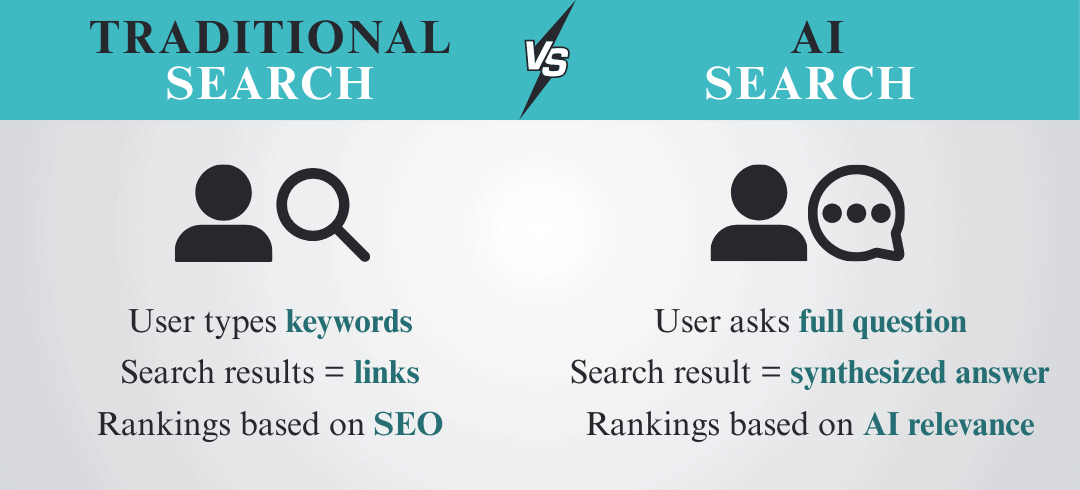
AI search operates differently from traditional results. Instead of showing a list of links, AI usually produces a synthesized answer that combines information from multiple sources. To stay part of that conversation, your content must be:

  • Structured clearly for machine readability
  • Concise and direct for quick summaries
  • Up-to-date, so it remains credible
  • Semantically rich so AI models can understand the context

The goal is no longer just ranking on the first page of Google’s search results. Instead, it’s about ensuring your evergreen content piece is selected for AI snippets and overview answers.

Traditional Search vs AI Search

How to Get Your Evergreen Content Ready for AI Search: Step-by-Step

To put this into practice, here are five practical steps to ensure your evergreen content remains visible and effective in an AI search world.


Step 1: Audit Your Evergreen Content for AI Visibility

Before you begin optimizing, assess what you currently have. Auditing helps you determine which posts are still effective and which ones need improvement.

How to run an audit:

  1. Check traffic and rankings: Use Google Search Console to see which evergreen pieces are still generating impressions.
  2. Test AI visibility: Run queries in Google AI Overviews or ChatGPT to see if your content is being referenced.
  3. Benchmark competitors: Identify who is winning AI snippets for your target keywords.

This process shows where your evergreen content is lagging. From there, you can focus on updates and improvements.


Step 2: Structure Content for AI Overviews and Snippets

AI models prefer content that’s easy to analyze and summarize. A lengthy block of text won’t work. Instead, organize your content clearly.

Best practices:

  • Use headings (H2, H3) to break content into logical sections.
  • Summarize key points in bullet lists or numbered steps.
  • Answer questions directly within the first few sentences of a section.
  • Add schema markup like FAQ or How-To where appropriate.

For example, if you write a post titled “How AI and Generative Search Are Changing Content Strategy,” don’t bury the answer. Start by clearly summarizing the key insights from the introduction, highlighting how AI affects content discovery and structuring, so both readers and AI models instantly understand its value.

Step 3: Optimize for Question-Based Search

AI search thrives on conversational queries. People are asking full questions rather than typing short keywords, and AI tools are trained to answer them.

How to adapt your evergreen content:

  • Add an FAQ section at the end of your post.
  • Use natural language questions as subheadings.
  • Include long-tail keywords like ‘Content Marketing Strategies to Drive Leads’ instead of only targeting ‘Content Marketing Strategies.’
  • Provide both short answers and expanded explanations.

Think of it this way: if a user asks an AI tool a direct question, your content should include the exact phrasing and the best possible answer.


Step 4: Refresh Outdated Evergreen Posts

Even the most evergreen content must be refreshed to maintain content with ongoing relevance in AI-powered SERPs. AI systems reward updated content because they aim to provide accurate and current information.

Ways to refresh evergreen content:

  • Update statistics, research, and examples with the latest data.
  • Replace outdated screenshots, tools, or references.
  • Add new insights that reflect current industry trends.
  • Re-check internal and external links to avoid broken references.

For example, a post written in 2020 about “SEO best practices” should be updated to include AI-driven search in 2025. Without updates, AI models may overlook your content and instead surface newer sources.

Semantic Clarity

Step 5: Write with Semantic Clarity and Concise Answers

AI tools don’t just look for keywords; they analyze meaning. That’s why semantic clarity is critical.

Tips for writing AI-ready content:

  • Be concise. Short, direct sentences are easier for AI to process.
  • Use semantic variations. If your focus keyword is ‘evergreen content,’ include related terms such as timeless content, sustainable content, content with lasting value, content with ongoing relevance, and long-term content assets.
  • Avoid jargon overload. Clarity beats complexity.
  • Balance depth with skim ability. Offer detailed insights but keep them easy to digest.

This way, content attracts both human readers and AI algorithms.


Optimizing Today, Creating for Tomorrow

Evergreen content continues to be one of the most powerful long-term content assets in your content marketing strategy. In the age of AI search, it must adapt to attract readers and perform well in AI-powered results. By auditing existing posts, structuring them for snippets, optimizing for questions, updating outdated content, and writing with semantic clarity, you ensure your content is both SEO-friendly and AI-ready.

Not sure where to start? Contact us today. We’ll help you optimize existing content and create new resources so your evergreen content is ready for AI search, keeping your brand visible in a changing search landscape.

FAQs

What is evergreen content?

Evergreen content is content that remains relevant over time, providing lasting value to readers. Examples include how-to guides, FAQs, industry glossaries, and best practice guides.

Why is evergreen content important for my business?

Evergreen content drives consistent traffic, boosts authority, improves search engine rankings, and supports social media sharing. Businesses that blog regularly see more website visitors than those that don’t.

How does evergreen content help with SEO?

Evergreen content generates ongoing visits, backlinks, and engagement, signaling relevance to search engines. It provides a lasting foundation that can also be leveraged in AI-powered search features, such as snippets, overview answers, and conversational responses.

How can I optimize evergreen content for AI search?

Structure your content clearly with headings, bullet points, and concise summaries. Include semantic variations, answer common questions directly, and keep content up-to-date to remain credible for AI-driven search results.

How often should I update evergreen content?

Even evergreen content should be refreshed periodically. Update statistics, examples, tools, and industry trends to maintain relevance and ensure AI systems consider your content accurate and current.

Can evergreen content improve my social media presence?

Yes. Shareable, high-value evergreen content can support your social media strategy by providing valuable resources your audience will engage with, driving traffic back to your site.

What is semantic clarity, and why does it matter for AI?

Semantic clarity means writing in a way that clearly communicates the meaning of your content. AI models analyze meaning, not just keywords, so clear, concise, and context-rich writing increases the chances your content will be selected for AI summaries and answers.

Are You Ready to Take Time Out?

Let’s create strategies that deliver real results for your business.

How AI and Generative Search Are Changing Content Strategy

How AI and Generative Search Are Changing Content Strategy

AI and Generative Search

Search is no longer what it used to be. Not long ago, marketers built strategies around ranking for a handful of keywords and climbing the traditional Google search engine results pages (SERPs). But with the rise of AI and generative search, the rules have shifted very quickly.

Google’s AI Overviews, Bing’s integration of ChatGPT, and AI-driven search assistants are changing how people discover information. For businesses and marketers, this means rethinking not just how content is created, but how it gets seen.

In this blog, we’ll explore what AI and generative search really mean for your content strategy, the risks and opportunities, and how you can stay ahead of the curve.


The Rise of AI in Search

Generative search goes beyond the classic “10 blue links.” Instead, AI tools provide summarized answers to a query directly on the search page, often pulling from multiple websites. For example:

  • Google AI Overviews: Offers conversational-style answers that mix information from different sources.
  • Bing Copilot: Uses GPT-powered responses to provide in-depth, context-rich answers.
  • AI assistants: Tools like Perplexity or ChatGPT are increasingly replacing traditional searches for some users.

What this means is that fewer people click through to websites because they’re getting what they need directly in search results. That doesn’t mean SEO is dead; it just means it’s evolving.

What is Generative AI Search

What Is Generative AI Search?

Generative AI search uses artificial intelligence to create direct answers and summaries instead of simply listing links. Instead of typing a query and scanning multiple results, users get an AI-generated response with insights from several sources.

This makes the search experience faster and more conversational. However, it also means your content must work harder to stand out if you want to be included in those summaries.


Conversational Search and Longer-Tail Queries

AI-driven search tools encourage people to type (or speak) their queries in a more natural way. Instead of short, broad keywords, users are asking conversational questions like:

  • Old style: “home builder Melbourne”
  • New style: “who is the best home builder in Melbourne for a first home buyer?”

For marketers, this means keyword research is less about raw search volume and more about search intent. Content that directly addresses user questions in clear, conversational language is more likely to surface in AI-generated summaries.

AI Summaries and Content Visibility

AI Summaries and Content Visibility

One of the biggest changes with generative search is that AI tools don’t just show one website; they summarize insights from multiple sources. This shift is changing how users find content, and marketers must act strategically to remain visible.

Risks to Be Aware Of

  • Declining click-throughs: When an AI summary is displayed, Google users click on traditional results only 8% of the time, which is nearly half the rate compared to pages without an AI summary (15%).
  • Organic traffic declines vary by industry: Some sectors face losses between 15% and a staggering 64%. News publishers, for instance, report drops of up to 79% when their first-page result lies beneath an AI overview.
  • Content misrepresentation/misinformation: AI summaries aren’t always accurate, which could misrepresent your brand or dilute your messaging.
  • Content saturation: AI accelerates content production, increasing competition and noise in your niche.

Where the Opportunities Lie

  • Visibility through authority: Clear, well-structured, authoritative content is more likely to be referenced in AI summaries, boosting brand visibility even if users don’t click through.
  • Early optimization pays off: Brands that invest early in AI-optimized content can gain a strategic advantage, standing out in AI-generated formats.
  • Thought leadership positioning: Forward-thinking marketers who leverage AI intelligently can establish authority and stand out in a crowded digital landscape.

The key is to create content that’s both valuable to readers and easy for AI systems to understand. By recognizing the challenges and embracing the opportunities, marketers can leverage the AI revolution to gain a competitive advantage.

who is time out marketing AI overview

Authority Signals and Credibility

To build trust and relevance in the AI-dominated search landscape, your content needs more than just quality; it needs credibility:

  • AI Overviews are rising: As of March 2025, 13.14% of Google queries triggered an AI overview, up from just 6.49% in January.
  • Screen dominance is growing: On desktop, AI Overviews and Featured Snippets together can occupy over two-thirds of the visible search screen, up to 75.7% on mobile.
  • CTR declines are sharp: CTRs have dropped by up to 30%, despite a 49% rise in Google search impressions.

By featuring data-driven insights, your content demonstrates depth and keeps readers and AI systems engaged.


How Does Generative AI Affect Search?

Generative AI is reshaping search at a deeper level than just summaries. It’s changing user behavior and the way businesses approach SEO.

  • For users: Search feels more like a conversation than a list of results. People are relying on AI tools for guidance, recommendations, and context, not just facts.
  • For businesses: SEO is becoming less about ranking for a single keyword and more about building topic authority. The brands that consistently demonstrate expertise and trustworthiness will have the advantage as AI chooses which sources to cite.

In short, generative AI is shifting search from being transactional (keywords in, clicks out) to being contextual and trust-driven.

How to future proof your content

How to Future-Proof Your Content

At Time Out Marketing, we’ve already guided clients through adapting to AI-generated search results. In this shifting landscape, your content must help AI systems understand, trust, and prioritize your work. That means:

  • Build topic authority: Instead of chasing individual keywords, create clusters of content around a theme to establish expertise.
  • Use structured data: Schema markup, FAQ sections, and how-to formats help AI understand your content better.
  • Optimize for E-E-A-T: Demonstrate Experience, Expertise, Authoritativeness, and Trustworthiness across your site.
  • Go deep: Thin, surface-level articles won’t cut it. AI tools prioritize comprehensive, well-researched content.


How to Adapt Your Strategy for the AI Era

Strong foundations are only half the story. You also need to think about how your content is executed and distributed in an AI-driven landscape:

  • Formatting matters: Use bullet points, subheadings, and Q&A structures to make your content snippet and AI-friendly.
  • Diversify traffic sources: Don’t rely solely on Google. Build stronger email lists, leverage social channels, and explore partnerships.
  • Balance human and AI: AI can help with research and drafts, but strategy, creativity, and storytelling still need a human touch.
  • Repurpose content: One blog can become a LinkedIn carousel, a short-form video, or even a downloadable checklist. Content repurposing maximizes your reach.
Thriving in the Age of AI and Generative Search

Thriving in the Age of AI and Generative Search

AI and generative search aren’t killing SEO; they’re reshaping it. The focus is shifting from chasing individual keywords to creating intent-driven, authoritative, and structured content that works for both people and machines.

Marketers who embrace these changes early, adapt their strategies, and focus on quality and authority will stay ahead of the competition.

Curious how ready your content is for the AI era? Contact us today, and let’s future-proof your content strategy together.

Are You Ready to Take Time Out?

Let’s create strategies that deliver real results for your business.