Why Your Website Needs to Be a Conversion Engine

Why Your Website Needs to Be a Conversion Engine

Website Conversion

For years, businesses were told that their websites were their shopfronts. This view made sense for website conversion because people would search, click on your site, browse the pages, and decide whether to engage with your business based on what they saw.

However, that’s no longer the case. Search behavior has changed, SEO has evolved, and AI now plays a significant role in how people find, assess, and decide.

Consequently, your website is no longer just about making a first impression; it’s now the final step before a decision. This shift means that website conversion should be the goal of your entire digital strategy.


The Shift: From Discovery to Decision

Let’s start with what’s actually happening today. Users are no longer just typing keywords into search engines (such as Google or Bing) and browsing pages and clicking through. Instead, they are:

  • Asking AI tools for direct answers
  • Getting summarized insights without leaving the search page
  • Comparing multiple options instantly
  • Building trust before they even visit a site

This is known as zero-click behavior, and it’s becoming more common.

By the time someone lands on your website, they’re not starting from scratch. They already have context, options, and, most importantly, intent. Therefore, your website has one primary job: to turn that intent into action.

Website shopfront

Why the Shopfront Mentality Is Outdated

Thinking of your website as a shopfront suggests people are casually browsing, discovering you, and stepping inside out of curiosity. But that’s not how digital journeys work anymore. Audiences today are:

  • Pre-informed
  • Pre-qualified
  • Often pre-sold

They’re not browsing randomly; they’re evaluating. So, when they land on your site now, they’re asking:

  • Is this the right fit for me?
  • Can I trust this business?
  • What do I do next?

If your site doesn’t answer those questions quickly and clearly, visitors won’t stick around, resulting in higher bounce rates, lower engagement, and lost conversion opportunities.


Why Website Conversion Matters More Than Ever

This is where the idea of a conversion engine becomes important. Instead of serving as a static online presence, your website should function as a system designed to:

  • Capture attention immediately
  • Communicate value clearly
  • Build trust quickly
  • Guide users toward action

It’s not about looking impressive; it’s about performance. And in today’s digital landscape, performance means generating real business outcomes.
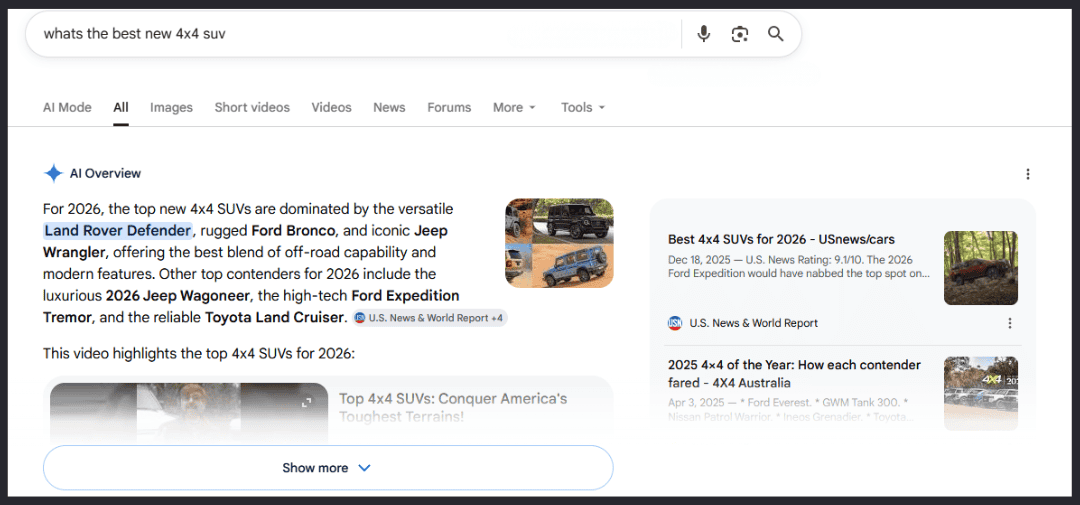
How AI has changed search

How AI Has Changed the Game

AI isn’t just a trend; it’s reshaping how people search and interact with information. Users can now:

  • Ask detailed questions and get instant answers
  • Receive curated recommendations
  • Narrow down their options in seconds

This results in fewer clicks but much higher intent. So when someone finally lands on your site, they’re much closer to a decision than before. This is a critical moment, and your website needs to meet it with clarity, confidence, and relevance.


Why Most Websites Fail to Convert

Despite these changes, many websites are still built on outdated principles. Here’s where they typically fall short:

Lack of Clear Messaging

Visitors shouldn’t have to figure out what you do. If your value isn’t immediately clear, attention is quickly lost.

Weak or Hidden Offers

Too many websites bury their services or force users to dig for information. In a fast-paced digital world, this creates friction and kills momentum.

No Defined User Journey

Without a clear path, users are left to navigate on their own, and most users won’t take one.

Design Over Function

A visually appealing site is great, but not at the expense of usability and conversions. Looks don’t convert, structure does.

Lack of Trust Signals

Users expect proof before they act. Testimonials, case studies, and results are essential, not optional.

What a High-Converting Website Needs Today

If your website is going to function like a true conversion engine, it needs to deliver:

Immediate Clarity

Visitors should immediately understand:

  • What you do
  • Who it’s for
  • Why it matters

No fluff. No confusion.

Strong, Visible Calls to Action

Whether it’s “Book a Call,” “Get a Quote,” or “Enquire Now,” your CTA should be:

  • Easy to find
  • Clearly worded
  • Strategically placed

Don’t make users search for the next step.

Structured User Flow

Every page should lead somewhere meaningful:

  • An enquiry
  • A booking
  • A purchase
  • A conversation

Think of your website as a guided journey, not just a collection of pages.

Trust and Credibility

Users need reassurance before they act. Trust signals should include:

  • Client testimonials
  • Case studies
  • Proven results
  • Industry experience

These elements reduce hesitation and build confidence.

Mobile-First Performance

Most users will visit your website on mobile. If your site is slow, clunky, or difficult to navigate, you’ve already lost them, regardless of how good it looks.
Is SEO Still Relevant in the Age of AI

Is SEO Still Relevant in the Age of AI?

There’s a common misconception that AI is killing SEO. It’s not, but it is changing what effective SEO looks like.

Today, SEO is no longer just about rankings. It’s about visibility, authority, performance, and conversion. It focuses on:

SEO and website conversion now work together. Ranking means very little if your website doesn’t turn that visibility into action.


Traffic Alone Isn’t the Goal Anymore

Many companies still focus primarily on traffic data and metrics: increasing visitors, clicks, and impressions. However, traffic alone is meaningless without conversions. It often results in low conversion rates, even when visibility looks strong on paper. What truly matters is:

  • Leads
  • Enquiries
  • Sales
  • Bookings

In other words, outcomes. And those outcomes are driven by how well your website performs once someone lands on it.

Is Your Website Ready to Convert Visitors Into Business

Is Your Website Ready to Convert Visitors Into Business?

Your website isn’t your shopfront anymore; it’s your conversion engine and your closing tool. It’s where decisions are made, trust is confirmed, and action is taken. If it’s not driving consistent business, you’re not just underperforming; you’re losing ready-to-buy customers.

In today’s AI-driven search and changing user behavior, simply having a website isn’t enough. It needs to guide, convert, and support decision-making at every step. If your website isn’t converting traffic into inquiries, leads, or sales, it’s not a traffic problem; it’s a performance problem.


Ready to Turn Your Website into a Conversion Engine?

At Time Out Marketing, we help businesses turn underperforming websites and landing pages into high-converting digital assets built for today’s AI-driven search behavior and real user intent.

Whether it’s a full rebuild or performance optimization, we’ll identify what’s holding your site back and improve what isn’t working. Contact us today and start turning your traffic into real business results.

FAQs

What is a website conversion engine?

A website conversion engine is a strategic approach that uses your website to convert visitors into leads, inquiries, or sales. Instead of acting as a digital brochure, it serves as a system that guides users to take action through clear messaging, structured user journeys, and strong calls to action.

Why is website conversion more important than traffic today?

Traffic alone doesn’t guarantee business results. In many cases, users arrive with intent already formed due to AI tools and search summaries. Because of this, the real value comes from how well your website converts that traffic into inquiries, leads, or sales.

How has AI changed website conversion?

AI has changed user behavior by reducing the number of clicks needed to get information. Users now receive direct answers, comparisons, and recommendations before visiting a website. This means visitors arrive more informed and closer to making a decision, making conversion performance more important than ever.

What makes a high-converting website?

A high-converting website is built around clarity, structure, and trust. It should clearly explain what you do, guide users through a simple journey, include strong calls to action, and provide trust signals such as testimonials, case studies, and proven results.

Why do most websites fail to convert visitors?

Most websites fail because they rely on outdated design and messaging principles. Common issues include unclear messaging, hidden offers and services, lack of user direction, design over function, and weak trust signals. These issues create friction and reduce conversions.

What is a good website conversion rate?

A good website conversion rate depends on the industry, but in general, it reflects how effectively your website turns visitors into leads or customers. Even with high traffic, poor conversion rates indicate that the website is not structured effectively to align with user intent or decision-making.

Is SEO still important with AI search?

Yes, SEO is still essential, but it has evolved. Modern SEO focuses on high-quality content, structured information, authority signals, and aligning with user intent. SEO now works alongside conversion optimization, meaning ranking well is only valuable if your website converts that traffic.

What is the difference between traffic and conversions?

Traffic refers to the number of visitors coming to your website, while conversions refer to the actions those visitors take, such as inquiries, bookings, or purchases. A successful website focuses on both visibility and performance, but prioritizes conversions as the real measure of success.

How can I improve my website conversion rate?

Improving conversion rates involves improving clarity, simplifying user journeys, strengthening calls to action, and building trust. It also includes ensuring your website is fast, mobile-friendly, and structured to guide users seamlessly toward specific actions.

Do landing pages improve website conversion?

Yes, landing pages can significantly improve conversion rates by focusing on a single goal or offer. Unlike general website pages, landing pages remove distractions and guide users toward one clear action, making them highly effective for campaigns and targeted traffic.

Why is my website getting traffic but no inquiries?

This usually indicates a conversion problem rather than a traffic problem. If users arrive but do not take action, it often means the messaging is unclear, the offer is not compelling, the user journey is confusing, or trust signals are missing.

How does Time Out Marketing improve website conversion?

Time Out Marketing helps businesses transform underperforming websites and landing pages into high-converting digital assets. This includes improving messaging, structure, user experience, and alignment with modern AI-driven search behavior to turn traffic into real business results.

Are You Ready to Take Time Out?

Let’s create strategies that deliver real results for your business.
SEO Web Design: Improve User Experience and Search Rankings

SEO Web Design: Improve User Experience and Search Rankings

SEO Web Design

In today’s digital marketing landscape, having the presence of just a website isn’t enough. Your site needs to be optimized for users and search engines. That’s where SEO web design comes in. But what is SEO web design, and why is it important for your business? In this blog, we’ll look at the intersection of web design and search engine optimization (SEO) and how combining the two can boost your website’s performance.


What is SEO in Web Design?

SEO is about making your website rank higher on search engine results pages (SERPs). It encompasses keywords and technical and design elements that improve user experience (UX) and search rankings.

But, when we talk about SEO in web design, we’re talking about strategies and techniques that make your website look good and structured so that search engines can easily crawl and index it. This includes:

  • Site Structure: Logically structuring your site so users and search engines can navigate it.
  • Responsive Design: Making your website mobile-friendly, as search engines favor mobile-optimized sites.
  • Page Speed: Ensuring your site loads quickly to improve user experience, which is also a ranking factor.

By integrating SEO into your website design, you create a foundation that attracts visitors and keeps them engaged.

SEO and Web Design

Understanding SEO Web Design

SEO web design is the marriage of beauty and functionality. While it’s easy to get caught up in how a website looks, a good web design should prioritize UX and SEO. Here are some key things to consider:

User Experience

A good UX design is about how a user interacts with your site. This includes:

  • Navigation: Make it easy for visitors to find what they need. If users can’t navigate your site quickly, they’ll leave, and your bounce rate will increase.
  • Clear Calls to Action (CTAs): A good CTA guides users to take the desired action, whether buying, signing up for a newsletter, or contacting your business.
  • Visual Hierarchy: Use design elements like font size and color contrast to draw attention to important information and guide the users’ focus.

Search Engine Optimization

On the SEO side, consider the following:

  • Keywords: Research and include relevant keywords naturally into your content, headings, and meta descriptions.
  • Meta Tags: Write great meta titles and descriptions that entice users to click through to your site.
  • Alt Text: Add descriptive alt text to images to improve accessibility and help search engines understand the content.

By combining UX and SEO, you create a website that looks good and performs well in search engines.

SEO Web Design 2

How Does Web Design Improve SEO?

A well-thought-out web design can do wonders for your site’s SEO. Here’s how:

1. Improved Crawlability

Search engines use bots to scan your site. A well-structured website allows these bots to crawl and understand your content easily. Using logical URLs and XML sitemaps makes it easier for search engines to index your pages, which can help your site appear in more search results.

2. Faster Loading Times

Did you know that nearly half of users expect a webpage to load in two seconds or less? 53% of mobile site visitors will leave a page that takes longer than three seconds to load. Slow websites frustrate users and negatively impact your SEO. By optimizing images, reducing heavy scripts, and cutting down server response time, you improve user satisfaction and search rankings.

3. Mobile Optimization

Responsive design is essential, as mobile traffic makes up more than half of all web usage, with 58% of global website traffic accounting for mobile devices. Search engines like Google prioritize mobile-optimized sites, meaning you’re likely missing out on traffic if your SEO-friendly website isn’t responsive. A mobile-first approach ensures you cater to these users and boosts your site’s visibility in search results.

4. Enhanced User Engagement

A well-designed website keeps users on your site longer. If visitors find your content engaging and can easily navigate the site, they will likely explore more. This reduces bounce rates and signals to search engines that your site is valuable, improving your rankings. The average bounce rate varies widely across industries, typically from 26% to 70%.

A higher bounce rate often indicates user dissatisfaction, irrelevant content, or poor navigation, negatively impacting user interaction and conversions. However, internal links can encourage visitors to explore related content, boosting engagement and SEO.

User Experience

The Impact of SEO Web Design on Conversions

Integrating SEO into your website design doesn’t just improve your visibility in search results—it also directly increases conversions. Here’s how:

1. Building Trust

A well-designed, professional website promotes trust in your visitors. Users may doubt your credibility if your site looks outdated or is difficult to navigate. On the other hand, a modern, friendly web design reassures visitors that your business is reliable, building trust and encouraging conversions.

2. Streamlined User Journey

When users can easily find what they’re looking for, they are more likely to convert, whether making a purchase or filling out a contact form. By guiding users smoothly through the journey, from awareness to decision-making, your overall conversion rate will be boosted.

3. Increased Engagement

Engaging visuals, well-placed CTAs, and easy-to-navigate on-page SEO features keep users on your site longer. The more time they spend exploring your content, the higher the chances they convert into paying customers.

4. Higher ROI

Investing in SEO web design delivers a better return on investment (ROI). You establish a sustainable business model that keeps paying off by attracting the right traffic and converting visitors into customers.

Best Practices for SEO Web Design

Maximize the benefits of SEO web design with these best practices:

1. Use Headings and Subheadings

Properly structured headings, such as H1, H2, and H3 tags, make your content more accessible for both users and search engines to navigate. This improves readability and enhances your SEO strategy by helping search engines understand the context of your pages.

2. Optimize Images and Alt Text

Compressing images reduces loading times, improving user interaction and search engine rankings. Descriptive alt text for images makes your site more accessible and contributes to technical SEO, helping search engines index your content more effectively.

3. Create a User-Friendly Navigation Structure

A straightforward, intuitive navigation menu lets users quickly find the necessary information. This improves the user journey, reduces bounce rates, and supports better rankings by making your site more engaging.

4. Utilize Schema Markup

Implementing schema markup helps search engines better understand your content, potentially boosting your visibility in search results through rich snippets. It also enhances user engagement by providing clearer, more structured information in SERPs.

5. Use Internal Linking Strategies

Internal links guide users to more relevant content and help search engines understand the relationship between pages on your site. A solid internal linking structure distributes link equity across your pages, ensuring that important content gets properly indexed and ranked. When setting up internal links, use descriptive anchor text that includes relevant keywords to give both users and search engines more context about what the linked page contains.

6. Monitor and Analyze Performance

Use tools like Google Search Console to track your website’s performance. Regular analysis of traffic sources, user behavior, and conversion rates helps identify areas for improvement and refines your SEO efforts.

7. Incorporate Technical SEO

Technical SEO involves optimizing your website’s backend elements like page speed, mobile responsiveness, and HTTPS security. These factors directly affect your site’s ranking potential and provide a seamless customer journey.

8. Focus on On-Page SEO

Optimizing each web page for SEO-friendly performance includes refining title tags, meta descriptions, and header tags and incorporating targeted keywords within your content. This attention to detail will help individual pages rank better and attract more relevant traffic.

Common mistakes to avoid

Common Mistakes to Avoid

When working on your SEO web design, be mindful of these common pitfalls:

1. Overloading with Keywords

Keyword stuffing can lead to penalties from search engines. Instead, focus on creating high-quality, engaging content that naturally incorporates relevant primary keywords and related terms. This approach makes your content more readable and SEO-friendly without resorting to unnatural repetition.

2. Neglecting Mobile Users

Always prioritize mobile optimization. If your site isn’t mobile-friendly, you risk losing significant traffic. Mobile responsiveness is vital to improving both the customer journey and SEO rankings.

3. Ignoring Page Load Speed

Page load speed directly impacts user satisfaction. If your website loads quickly, visitors will stay. Regularly test your site’s speed and use techniques like image compression and code optimization to keep your load times competitive.

4. Overlooking the Role of Social Media

While social media doesn’t directly impact your SEO rankings, it plays a crucial role in amplifying your content and driving traffic to your site. Sharing your blog posts, product pages, or case studies across platforms like Facebook, Instagram, LinkedIn, and X can increase visibility.

The more engagement your content gets through likes, shares, and comments, the more it signals to search engines that your site is active and authoritative. Additionally, social media can help build backlinks as more users discover and link your content, improving your site’s authority and SEO performance.

SEO navigation structure

Examples of Effective SEO Web Design

To showcase the principles we’ve discussed, here are a few examples of websites that excel in SEO web design:

  • Airbnb: Known for its intuitive navigation and mobile optimization, Airbnb’s clean design, coupled with high-quality visuals, creates an engaging customer experience that drives conversions.
  • Amazon: Amazon’s robust and mobile-friendly platform emphasizes speed and usability. Its SEO-optimized product pages, fast load times, and personalized recommendations enhance the UX, driving traffic and conversions.
  • Shopify: Shopify uses a fast, SEO-friendly design that’s optimized for mobile. Its quick loading times and clean layout make shopping effortless for users, increasing conversion rates.


Achieve Online Success with SEO-Optimized Web Design

Integrating SEO into your web design is essential for any business aiming to succeed online. Focusing on user experience and SEO best practices will enhance your site’s visibility, attract the right traffic, and ultimately increase conversions. Effective content marketing strategies, like sharing quality content across social platforms, can significantly boost your site’s relevance and authority, leading to better search results and increased engagement.

As part of your digital marketing strategy, consider how web design and SEO work together to create an effective SEO-friendly website and evaluate if your site truly supports your business goals. If you’re ready to take your web design to the next level, Time Out Marketing is here to help. Whether you want to revamp your site, create a new one, or improve your SEO, contact us today to get started!

Are You Ready to Take Time Out?

Let’s create strategies that deliver real results for your business.