AI Search and Visibility: Why Content Still Matters for SEO

AI Search and Visibility: Why Content Still Matters for SEO

AI Search and Visibility

AI Search is changing how people discover information online. However, quality content still matters for SEO because it allows websites to be found, understood, and referenced by both search engines and AI-powered systems.

In the past, SEO success was defined by rankings, backlinks, and keyword optimization. While those fundamentals still matter, the way people access information is evolving. Increasingly, users are turning to AI-driven search experiences and LLMs (Large Language Models) that summarize answers rather than simply listing websites.

This shift has raised an important question for marketers and business owners: Does content still matter in an AI-driven search world?

The short answer is yes, more so than ever. But the role of content has evolved.


Understanding AI Search and Its Impact on Visibility

AI Search refers to search experiences powered by artificial intelligence, where users receive direct, conversational answers rather than just a list of blue links. These systems may pull from search indexes, training data, or live web sources to generate responses.

This changes how visibility works. Instead of competing only for rankings on Google search engine result pages (SERPs), businesses now compete for:

  • Inclusion in AI-generated answers
  • Citations within summaries
  • Authority signals that influence AI trust
  • Relevance across broader topic clusters rather than single keywords

Visibility is no longer just about being on page one. It’s about being recognized as a reliable source that AI systems can confidently reference.

In many ways, AI Search and AI Visibility are two sides of the same coin. The easier it is for AI systems to find, understand, and trust your content, the more likely your business is to appear in AI-generated responses.

Why Content Still Matters for SEO

Why Content Still Matters for SEO in an AI Search World

Despite the rise of AI Search, content remains the foundation of online visibility for one simple reason: AI systems still rely on content to learn, evaluate, and respond.

Whether it’s traditional search engines or AI models, they all depend on structured, high-quality information published across the web.

If your website does not contain the answers people are searching for, there is nothing for search engines or AI systems to interpret, rank, or reference.

Content performs three essential roles:

1. Helps search engines understand your relevance

Search engines still rely heavily on text-based signals to understand what a page is about. Well-written, structured content helps algorithms categorize your pages correctly and match them to user intent.

2. Provides the raw material for AI responses

AI systems generate answers by drawing from trusted sources. If your content is clear, authoritative, and well-structured, it is more likely to be used in those responses.

3. Builds authority over time

Consistent, high-value content builds topical authority. This signals to both search engines and AI models that your website is a reliable source within your niche.

Without content, visibility is not possible.


How AI Systems Use Content to Determine Visibility

While the exact algorithms vary, most AI search experiences rely on a combination of:

  • Indexed web data
  • Semantic relevance
  • Authority indicators
  • Content clarity and structure

Unlike traditional SEO, where a page might rank based on keyword optimization, AI systems prioritize content that is:

  • Easy to interpret
  • Factually consistent
  • Contextually rich
  • Directly aligned with user intent

This means thin, vague, or overly optimized content is far less likely to be referenced. In contrast, content that clearly explains a topic is much more likely to be included in AI-generated answers.

The Evolution of SEO: From Keywords to Context

SEO has shifted from keyword matching to meaning and search intent. While keywords like AI search still matter, modern SEO focuses on:

  • Topical depth over single-page optimization
  • User intent over exact-match keywords
  • Semantic relationships between concepts
  • Content quality and clarity over volume

This is why content strategy is central to SEO performance. A website that publishes shallow, keyword-focused articles will struggle to compete with one that provides in-depth, useful, and well-structured information.


What High-Performing Content Looks Like Today

In an AI search environment, strong content typically shares a few key characteristics:

  • Answers questions clearly and directly: Users and AI systems value content that is direct and provides useful information.
  • Demonstrates expertise: Content should show understanding, not just repetition.
  • Covers topics comprehensively: Rather than focusing on a narrow keyword, strong content explores related ideas and subtopics.
  • Is structured logically: Clear formatting with headings, sections, and flow improves readability and machine interpretation.
  • It aligns with search intent: Whether informational, commercial, or comparative, content must match what the user is trying to achieve.

These factors improve both SEO performance and AI visibility.


Common Mistakes Businesses Still Make

Even as SEO evolves, many businesses continue to approach content the old way. Some of the most common mistakes include:

1. Writing for keywords instead of people

Over-optimized content often fails to engage users and is less likely to be trusted by AI systems.

2. Publishing thin or generic content

Low-value pages are unlikely to rank or be cited, no matter how well they are optimized.

3. Ignoring content depth

Surface-level content struggles to build authority in competitive spaces.

4. Treating SEO and content separately

They are fully integrated and work together as a duo.

5. Relying on outdated content

Outdated content loses relevance as search engines and AI systems prioritize fresh information.

6. Having no content at all

Without content, there is nothing for search engines or AI systems to index or reference, making visibility impossible.

Avoiding these mistakes is key to long-term visibility.

The Future of AI Search and Content Visibility

The Future of AI Search and Content Visibility

As AI search evolves, the importance of high-quality content is increasing rather than decreasing. Search engines and AI systems will continue prioritizing sources that:

  • Provide accurate information
  • Demonstrate authority
  • Offer depth and clarity
  • Consistently publish high-quality content

In other words, the fundamentals of SEO are not disappearing; they are being amplified.

Visibility is no longer just about ranking positions. It is about being part of the answer itself.


Why Quality Content Remains the Foundation of SEO

AI Search is reshaping how people find information online, but quality content remains the foundation of SEO. Without valuable, structured, and authoritative content, websites will struggle to achieve visibility in both traditional search and AI-generated results.

For businesses, the message is clear. Invest in content that informs, educates, and builds authority. That is what drives long-term visibility in both search engines and AI-powered platforms.

While the technology behind search continues to evolve, one principle remains unchanged: content is king. Quality content is what helps your business get found, trusted, ranked, and referenced.

Want to improve your content strategy for AI search and SEO? Contact us today to start building content that gets found, ranked, and referenced.

FAQs

What is AI Search?

AI Search refers to search systems that use artificial intelligence to generate direct answers to user queries rather than displaying traditional lists of search results.

Does SEO still matter with AI search?

Yes. SEO remains essential because AI systems rely on indexed, structured web content to generate responses and identify authoritative sources.

Why is quality content important for SEO?

Quality content helps search engines understand relevance, improves user engagement, and increases the likelihood of being cited in AI-generated answers.

How does AI decide what content to show?

AI systems consider relevance, authority, clarity, structure, and how well content answers user intent when selecting sources for responses.

Is keyword optimization still important?

Yes, but it is no longer the sole focus. Modern SEO prioritizes topic depth, intent, and content quality over exact keyword matching.

Why Your Website Needs to Be a Conversion Engine

Why Your Website Needs to Be a Conversion Engine

Website Conversion

For years, businesses were told that their websites were their shopfronts. This view made sense for website conversion because people would search, click on your site, browse the pages, and decide whether to engage with your business based on what they saw.

However, that’s no longer the case. Search behavior has changed, SEO has evolved, and AI now plays a significant role in how people find, assess, and decide.

Consequently, your website is no longer just about making a first impression; it’s now the final step before a decision. This shift means that website conversion should be the goal of your entire digital strategy.


The Shift: From Discovery to Decision

Let’s start with what’s actually happening today. Users are no longer just typing keywords into search engines (such as Google or Bing) and browsing pages and clicking through. Instead, they are:

  • Asking AI tools for direct answers
  • Getting summarized insights without leaving the search page
  • Comparing multiple options instantly
  • Building trust before they even visit a site

This is known as zero-click behavior, and it’s becoming more common.

By the time someone lands on your website, they’re not starting from scratch. They already have context, options, and, most importantly, intent. Therefore, your website has one primary job: to turn that intent into action.

Website shopfront

Why the Shopfront Mentality Is Outdated

Thinking of your website as a shopfront suggests people are casually browsing, discovering you, and stepping inside out of curiosity. But that’s not how digital journeys work anymore. Audiences today are:

  • Pre-informed
  • Pre-qualified
  • Often pre-sold

They’re not browsing randomly; they’re evaluating. So, when they land on your site now, they’re asking:

  • Is this the right fit for me?
  • Can I trust this business?
  • What do I do next?

If your site doesn’t answer those questions quickly and clearly, visitors won’t stick around, resulting in higher bounce rates, lower engagement, and lost conversion opportunities.


Why Website Conversion Matters More Than Ever

This is where the idea of a conversion engine becomes important. Instead of serving as a static online presence, your website should function as a system designed to:

  • Capture attention immediately
  • Communicate value clearly
  • Build trust quickly
  • Guide users toward action

It’s not about looking impressive; it’s about performance. And in today’s digital landscape, performance means generating real business outcomes.

How AI has changed search

How AI Has Changed the Game

AI isn’t just a trend; it’s reshaping how people search and interact with information. Users can now:

  • Ask detailed questions and get instant answers
  • Receive curated recommendations
  • Narrow down their options in seconds

This results in fewer clicks but much higher intent. So when someone finally lands on your site, they’re much closer to a decision than before. This is a critical moment, and your website needs to meet it with clarity, confidence, and relevance.


Why Most Websites Fail to Convert

Despite these changes, many websites are still built on outdated principles. Here’s where they typically fall short:

Lack of Clear Messaging

Visitors shouldn’t have to figure out what you do. If your value isn’t immediately clear, attention is quickly lost.

Weak or Hidden Offers

Too many websites bury their services or force users to dig for information. In a fast-paced digital world, this creates friction and kills momentum.

No Defined User Journey

Without a clear path, users are left to navigate on their own, and most users won’t take one.

Design Over Function

A visually appealing site is great, but not at the expense of usability and conversions. Looks don’t convert, structure does.

Lack of Trust Signals

Users expect proof before they act. Testimonials, case studies, and results are essential, not optional.

What a High-Converting Website Needs Today

If your website is going to function like a true conversion engine, it needs to deliver:

Immediate Clarity

Visitors should immediately understand:

  • What you do
  • Who it’s for
  • Why it matters

No fluff. No confusion.

Strong, Visible Calls to Action

Whether it’s “Book a Call,” “Get a Quote,” or “Enquire Now,” your CTA should be:

  • Easy to find
  • Clearly worded
  • Strategically placed

Don’t make users search for the next step.

Structured User Flow

Every page should lead somewhere meaningful:

  • An enquiry
  • A booking
  • A purchase
  • A conversation

Think of your website as a guided journey, not just a collection of pages.

Trust and Credibility

Users need reassurance before they act. Trust signals should include:

  • Client testimonials
  • Case studies
  • Proven results
  • Industry experience

These elements reduce hesitation and build confidence.

Mobile-First Performance

Most users will visit your website on mobile. If your site is slow, clunky, or difficult to navigate, you’ve already lost them, regardless of how good it looks.

Is SEO Still Relevant in the Age of AI

Is SEO Still Relevant in the Age of AI?

There’s a common misconception that AI is killing SEO. It’s not, but it is changing what effective SEO looks like.

Today, SEO is no longer just about rankings. It’s about visibility, authority, performance, and conversion. It focuses on:

SEO and website conversion now work together. Ranking means very little if your website doesn’t turn that visibility into action.


Traffic Alone Isn’t the Goal Anymore

Many companies still focus primarily on traffic data and metrics: increasing visitors, clicks, and impressions. However, traffic alone is meaningless without conversions. It often results in low conversion rates, even when visibility looks strong on paper. What truly matters is:

  • Leads
  • Enquiries
  • Sales
  • Bookings

In other words, outcomes. And those outcomes are driven by how well your website performs once someone lands on it.

Is Your Website Ready to Convert Visitors Into Business

Is Your Website Ready to Convert Visitors Into Business?

Your website isn’t your shopfront anymore; it’s your conversion engine and your closing tool. It’s where decisions are made, trust is confirmed, and action is taken. If it’s not driving consistent business, you’re not just underperforming; you’re losing ready-to-buy customers.

In today’s AI-driven search and changing user behavior, simply having a website isn’t enough. It needs to guide, convert, and support decision-making at every step. If your website isn’t converting traffic into inquiries, leads, or sales, it’s not a traffic problem; it’s a performance problem.


Ready to Turn Your Website into a Conversion Engine?

At Time Out Marketing, we help businesses turn underperforming websites and landing pages into high-converting digital assets built for today’s AI-driven search behavior and real user intent.

Whether it’s a full rebuild or performance optimization, we’ll identify what’s holding your site back and improve what isn’t working. Contact us today and start turning your traffic into real business results.

FAQs

What is a website conversion engine?

A website conversion engine is a strategic approach that uses your website to convert visitors into leads, inquiries, or sales. Instead of acting as a digital brochure, it serves as a system that guides users to take action through clear messaging, structured user journeys, and strong calls to action.

Why is website conversion more important than traffic today?

Traffic alone doesn’t guarantee business results. In many cases, users arrive with intent already formed due to AI tools and search summaries. Because of this, the real value comes from how well your website converts that traffic into inquiries, leads, or sales.

How has AI changed website conversion?

AI has changed user behavior by reducing the number of clicks needed to get information. Users now receive direct answers, comparisons, and recommendations before visiting a website. This means visitors arrive more informed and closer to making a decision, making conversion performance more important than ever.

What makes a high-converting website?

A high-converting website is built around clarity, structure, and trust. It should clearly explain what you do, guide users through a simple journey, include strong calls to action, and provide trust signals such as testimonials, case studies, and proven results.

Why do most websites fail to convert visitors?

Most websites fail because they rely on outdated design and messaging principles. Common issues include unclear messaging, hidden offers and services, lack of user direction, design over function, and weak trust signals. These issues create friction and reduce conversions.

What is a good website conversion rate?

A good website conversion rate depends on the industry, but in general, it reflects how effectively your website turns visitors into leads or customers. Even with high traffic, poor conversion rates indicate that the website is not structured effectively to align with user intent or decision-making.

Is SEO still important with AI search?

Yes, SEO is still essential, but it has evolved. Modern SEO focuses on high-quality content, structured information, authority signals, and aligning with user intent. SEO now works alongside conversion optimization, meaning ranking well is only valuable if your website converts that traffic.

What is the difference between traffic and conversions?

Traffic refers to the number of visitors coming to your website, while conversions refer to the actions those visitors take, such as inquiries, bookings, or purchases. A successful website focuses on both visibility and performance, but prioritizes conversions as the real measure of success.

How can I improve my website conversion rate?

Improving conversion rates involves improving clarity, simplifying user journeys, strengthening calls to action, and building trust. It also includes ensuring your website is fast, mobile-friendly, and structured to guide users seamlessly toward specific actions.

Do landing pages improve website conversion?

Yes, landing pages can significantly improve conversion rates by focusing on a single goal or offer. Unlike general website pages, landing pages remove distractions and guide users toward one clear action, making them highly effective for campaigns and targeted traffic.

Why is my website getting traffic but no inquiries?

This usually indicates a conversion problem rather than a traffic problem. If users arrive but do not take action, it often means the messaging is unclear, the offer is not compelling, the user journey is confusing, or trust signals are missing.

How does Time Out Marketing improve website conversion?

Time Out Marketing helps businesses transform underperforming websites and landing pages into high-converting digital assets. This includes improving messaging, structure, user experience, and alignment with modern AI-driven search behavior to turn traffic into real business results.

Are You Ready to Take Time Out?

Let’s create strategies that deliver real results for your business.

How AI and Generative Search Are Changing Content Strategy

How AI and Generative Search Are Changing Content Strategy

AI and Generative Search

Search is no longer what it used to be. Not long ago, marketers built strategies around ranking for a handful of keywords and climbing the traditional Google search engine results pages (SERPs). But with the rise of AI and generative search, the rules have shifted very quickly.

Google’s AI Overviews, Bing’s integration of ChatGPT, and AI-driven search assistants are changing how people discover information. For businesses and marketers, this means rethinking not just how content is created, but how it gets seen.

In this blog, we’ll explore what AI and generative search really mean for your content strategy, the risks and opportunities, and how you can stay ahead of the curve.


The Rise of AI in Search

Generative search goes beyond the classic “10 blue links.” Instead, AI tools provide summarized answers to a query directly on the search page, often pulling from multiple websites. For example:

  • Google AI Overviews: Offers conversational-style answers that mix information from different sources.
  • Bing Copilot: Uses GPT-powered responses to provide in-depth, context-rich answers.
  • AI assistants: Tools like Perplexity or ChatGPT are increasingly replacing traditional searches for some users.

What this means is that fewer people click through to websites because they’re getting what they need directly in search results. That doesn’t mean SEO is dead; it just means it’s evolving.

What is Generative AI Search

What Is Generative AI Search?

Generative AI search uses artificial intelligence to create direct answers and summaries instead of simply listing links. Instead of typing a query and scanning multiple results, users get an AI-generated response with insights from several sources.

This makes the search experience faster and more conversational. However, it also means your content must work harder to stand out if you want to be included in those summaries.


Conversational Search and Longer-Tail Queries

AI-driven search tools encourage people to type (or speak) their queries in a more natural way. Instead of short, broad keywords, users are asking conversational questions like:

  • Old style: “home builder Melbourne”
  • New style: “who is the best home builder in Melbourne for a first home buyer?”

For marketers, this means keyword research is less about raw search volume and more about search intent. Content that directly addresses user questions in clear, conversational language is more likely to surface in AI-generated summaries.

AI Summaries and Content Visibility

AI Summaries and Content Visibility

One of the biggest changes with generative search is that AI tools don’t just show one website; they summarize insights from multiple sources. This shift is changing how users find content, and marketers must act strategically to remain visible.

Risks to Be Aware Of

  • Declining click-throughs: When an AI summary is displayed, Google users click on traditional results only 8% of the time, which is nearly half the rate compared to pages without an AI summary (15%).
  • Organic traffic declines vary by industry: Some sectors face losses between 15% and a staggering 64%. News publishers, for instance, report drops of up to 79% when their first-page result lies beneath an AI overview.
  • Content misrepresentation/misinformation: AI summaries aren’t always accurate, which could misrepresent your brand or dilute your messaging.
  • Content saturation: AI accelerates content production, increasing competition and noise in your niche.

Where the Opportunities Lie

  • Visibility through authority: Clear, well-structured, authoritative content is more likely to be referenced in AI summaries, boosting brand visibility even if users don’t click through.
  • Early optimization pays off: Brands that invest early in AI-optimized content can gain a strategic advantage, standing out in AI-generated formats.
  • Thought leadership positioning: Forward-thinking marketers who leverage AI intelligently can establish authority and stand out in a crowded digital landscape.

The key is to create content that’s both valuable to readers and easy for AI systems to understand. By recognizing the challenges and embracing the opportunities, marketers can leverage the AI revolution to gain a competitive advantage.

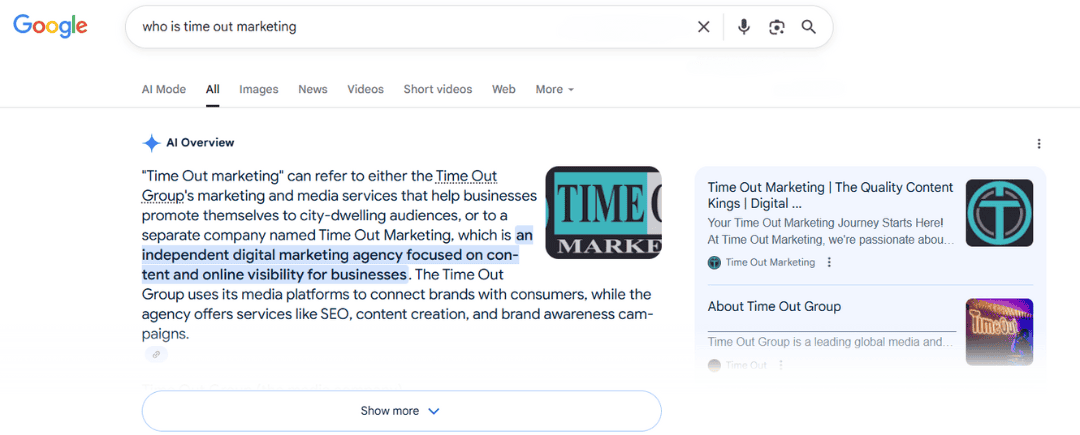
who is time out marketing AI overview

Authority Signals and Credibility

To build trust and relevance in the AI-dominated search landscape, your content needs more than just quality; it needs credibility:

  • AI Overviews are rising: As of March 2025, 13.14% of Google queries triggered an AI overview, up from just 6.49% in January.
  • Screen dominance is growing: On desktop, AI Overviews and Featured Snippets together can occupy over two-thirds of the visible search screen, up to 75.7% on mobile.
  • CTR declines are sharp: CTRs have dropped by up to 30%, despite a 49% rise in Google search impressions.

By featuring data-driven insights, your content demonstrates depth and keeps readers and AI systems engaged.


How Does Generative AI Affect Search?

Generative AI is reshaping search at a deeper level than just summaries. It’s changing user behavior and the way businesses approach SEO.

  • For users: Search feels more like a conversation than a list of results. People are relying on AI tools for guidance, recommendations, and context, not just facts.
  • For businesses: SEO is becoming less about ranking for a single keyword and more about building topic authority. The brands that consistently demonstrate expertise and trustworthiness will have the advantage as AI chooses which sources to cite.

In short, generative AI is shifting search from being transactional (keywords in, clicks out) to being contextual and trust-driven.

How to future proof your content

How to Future-Proof Your Content

At Time Out Marketing, we’ve already guided clients through adapting to AI-generated search results. In this shifting landscape, your content must help AI systems understand, trust, and prioritize your work. That means:

  • Build topic authority: Instead of chasing individual keywords, create clusters of content around a theme to establish expertise.
  • Use structured data: Schema markup, FAQ sections, and how-to formats help AI understand your content better.
  • Optimize for E-E-A-T: Demonstrate Experience, Expertise, Authoritativeness, and Trustworthiness across your site.
  • Go deep: Thin, surface-level articles won’t cut it. AI tools prioritize comprehensive, well-researched content.


How to Adapt Your Strategy for the AI Era

Strong foundations are only half the story. You also need to think about how your content is executed and distributed in an AI-driven landscape:

  • Formatting matters: Use bullet points, subheadings, and Q&A structures to make your content snippet and AI-friendly.
  • Diversify traffic sources: Don’t rely solely on Google. Build stronger email lists, leverage social channels, and explore partnerships.
  • Balance human and AI: AI can help with research and drafts, but strategy, creativity, and storytelling still need a human touch.
  • Repurpose content: One blog can become a LinkedIn carousel, a short-form video, or even a downloadable checklist. Content repurposing maximizes your reach.
Thriving in the Age of AI and Generative Search

Thriving in the Age of AI and Generative Search

AI and generative search aren’t killing SEO; they’re reshaping it. The focus is shifting from chasing individual keywords to creating intent-driven, authoritative, and structured content that works for both people and machines.

Marketers who embrace these changes early, adapt their strategies, and focus on quality and authority will stay ahead of the competition.

Curious how ready your content is for the AI era? Contact us today, and let’s future-proof your content strategy together.

Are You Ready to Take Time Out?

Let’s create strategies that deliver real results for your business.

SEO Marketing: Transform Your Website From Rags to Riches

SEO Marketing: Transform Your Website From Rags to Riches

SEO Marketing
If you’re struggling to get your website noticed, you’re not alone. Many businesses face the same challenge. You might have great content, a beautiful site, and even a product that could change lives, but if your website isn’t optimized for search engines, you’re essentially invisible to your target audience.

But here’s the good news: SEO marketing can be the turning point. SEO (Search Engine Optimization) is the key to turning your online presence from a hidden gem into a traffic magnet. With the right approach, your website can go from languishing in the depths of search engine results to standing tall at the top.

In this blog, we’ll walk you through how SEO marketing can take your digital presence from rags to riches, boosting visibility, traffic, and sales in the process. Let’s dive in.


What is SEO Marketing?

SEO marketing is a process that involves optimizing your website to improve its rankings in search engine results pages (SERPs). The goal? To make it easier for people to find your website when they search for relevant terms (keywords).

When executed correctly, SEO marketing helps increase organic search traffic, the visitors who visit your site from unpaid search results. It’s an ongoing effort that involves fine-tuning everything from your content and keywords to your website’s technical performance.

“SEO is like a marathon: you need to start the race to even have a chance of crossing the finish line.”

SEO is like a marathon

The Struggles Before SEO Marketing

If you’re not using SEO, chances are your web presence is stuck in digital obscurity. This is the unfortunate reality for many businesses.

Without proper SEO, your website may face a host of issues:

  • Low Traffic: Without optimization, your website may rank low in search results, meaning fewer people can find it.
  • Lack of Engagement: If your website isn’t optimized to appeal to both search engines and users, visitors may quickly bounce off.
  • Missed Opportunities: You’re potentially losing out on valuable leads or sales simply because people aren’t seeing your content in search results.

These struggles are frustrating, but they can be easily addressed with the right SEO strategies and resources. Let’s now look at how SEO works and how it can take your website from rags to riches.


How SEO Marketing Works

SEO marketing isn’t a one-size-fits-all solution. It involves a combination of strategies that can help your website reach new heights. Here’s how it works:

Keyword Research and Optimization

It all starts with keyword research, identifying the words and phrases your potential customers are typing into search engines based on their search intent (what they are looking for) and user intent (why they are searching). Understanding this ensures your content aligns with what your audience actually needs.

For example, if you’re a home builder, someone searching for “affordable house and land packages in Melbourne” likely has a transactional intent, meaning they are closer to making a decision. On the other hand, a search like “how to choose the right home builder” indicates informational intent, meaning the user is still in the research phase. By optimizing for both types of intent, you can attract the right visitors at different stages of their buying journey.

On page SEO

On-Page SEO

Once you’ve identified the right keywords, it’s time to optimize your website’s content. On-page SEO refers to the elements you can control directly on your website, including:

  • Content optimization: Create high-quality, keyword-rich content that answers your audience’s questions and provides value.
  • Meta Tags: Title tags and meta descriptions help search engines understand what your page is about.
  • Headings and Subheadings: These make your content easier to read and help search engines better understand the structure of your page.
  • Internal Linking: Linking to other relevant pages on your website boosts your SEO and helps visitors navigate your site.

Technical SEO

Technical SEO involves optimizing the behind-the-scenes elements of your website. Think of it as making sure your website is structurally sound and easy for search engines to crawl and index. Important technical elements include:

  • Site Speed: A fast-loading website offers a better user experience and can help you rank higher.
  • Mobile Responsiveness: A responsive design is crucial for SEO success with more users browsing on mobile devices.
  • SSL Certificates: Security is important for both SEO and user trust. HTTPS encryption is a must for modern websites.

Off-Page SEO

Off-page SEO focuses on building your website’s authority through backlinks, or links from other websites pointing to yours. Search engines use these links as a vote of confidence in your content.

The more high-quality backlinks you have, the more authority your website gains, which can lead to better rankings. Some strategies for building backlinks include:

  • Guest Blogging: Write for reputable sites in your industry and include a link back to your website.
  • Content Promotion: Share your content on social media to increase the chances of others linking back to it.
  • Networking: Connect with industry influencers who may link to your website in their content.

The Benefits of SEO Marketing

Once you’ve optimized your website with SEO, the rewards are abundant. Here are the key benefits:

Increased Organic Traffic

By targeting the right keywords and improving your rankings, SEO marketing drives more relevant visitors to your site. The best part? This traffic is free. Unlike paid advertising, you don’t have to spend a cent to get people to your website once you’ve ranked well.

Better User Experience

SEO isn’t just about getting people to visit your site; it’s about keeping them there. By improving technical aspects like site speed and mobile optimization, SEO ensures visitors can easily navigate your website and find what they need. This leads to higher engagement and lower bounce rates.

Higher Conversion Rates

When visitors find exactly what they’re looking for quickly and easily, they’re more likely to take action, whether signing up for your newsletter, downloading a guide, or making a purchase. With a solid SEO strategy, your website becomes a conversion machine.

The future of SEO

The Future of SEO

SEO marketing in 2025 isn’t just about optimizing for traditional search engines; it’s about understanding the evolving role of AI in search results. Google’s use of AI technologies like BERT, MUM, and RankBrain is reshaping how search engines process and rank content. These AI systems are designed to better understand search intent and provide more accurate, context-driven results, meaning SEO strategies must evolve to keep up.

While traditional SEO strategies still play a crucial role in digital marketing, here are some key trends you should consider:

  • Intent-Based Optimization: With AI understanding the true intent behind a search query, it’s more important than ever to ensure your content answers your audience’s specific questions and needs.
  • AI Search Features: AI now generates featured snippets, answer boxes, and direct summaries on search results pages, meaning websites must optimize to appear in these AI-driven overviews.
  • Content Quality Over Quantity: As AI becomes better at analyzing content, it can easily detect low-quality, spammy content. To stay ahead, you must focus on providing authoritative, valuable content that truly serves your audience.
  • Personalization and User Experience: AI tailors search results based on user data, so focusing on personalized content and improving user experience (site speed, mobile optimization, etc.) will remain key in SEO.


SEO Success Story

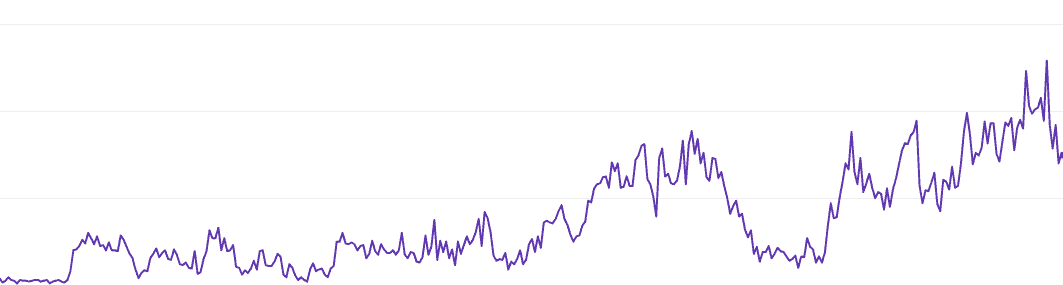
Let’s look at an example. Take a music marketing and promotions company. Before implementing SEO, their website was buried in Google search results, with minimal visibility and very few impressions. After conducting keyword research, optimizing their content, and improving their overall SEO strategy, they saw a 200% increase in daily impressions.

The result? A dramatic boost in discoverability and engagement, proving the true power of SEO in increasing the visibility of your website and driving organic traffic.

Website Impressions

Steps to Start Your SEO Journey

If you’re ready to transform your website with SEO, here are the steps you can start taking today:


  1. Conduct Keyword Research: Use free options (e.g. Google’s Keyword Planner or Answer The Public) or paid tools (e.g. SEMrush or Ahrefs) to find the right keywords for your business.
  2. Optimize Your Content: Ensure your pages include the right keywords and provide value to your audience.
  3. Improve Technical SEO: Ensure your site is fast, mobile-friendly, and secure.
  4. Build Backlinks: Start guest blogging or networking to gain backlinks and build your website’s authority.
  5. Monitor Progress: Use Google Analytics and other tools to track your SEO performance and make necessary adjustments.
Transform you website with SEO

Your Path to Digital Success

SEO marketing is not a quick fix; it’s a long-term strategy that can take your website from rags to riches. By improving visibility, driving more organic traffic, and enhancing user experience, SEO gives your website the foundation it needs to thrive.

So, if you’re ready to unlock the power of SEO and transform your website, there’s no better time to start than now. Get the right SEO strategies in place, and watch your website reach its full potential.

Take time out and contact us today. Start your journey to digital success and watch your website grow.

Are You Ready to Take Time Out?

Let’s create strategies that deliver real results for your business.

25 SEO Strategies for Success in 2025: How to Succeed

25 SEO Strategies for Success in 2025: How to Succeed

SEO Strategies for Success
The world of SEO (search engine optimization) is ever-evolving, and staying ahead with the right SEO strategies for success is essential for anyone looking to maintain or boost their online presence. As search engines become smarter, more user-centric, and increasingly influenced by technological advancements like AI, aligning your digital marketing strategy with the latest trends and best practices is more critical than ever.

In this blog, we’ll explore 25 effective SEO strategies that will play a pivotal role in driving SEO success in 2025. These actionable tips will help you incorporate cutting-edge techniques into your marketing playbook, ensuring your website remains visible, relevant, and ahead of the competition.


SEO Strategies for Success 1-5


1. Optimize for Search Intent

Understanding search intent is crucial in creating content that satisfies what users are looking for. Ensure your content matches their goals—whether informational, navigational, commercial, or transactional. Conduct thorough keyword research to identify the exact questions or problems your audience is asking, and create content that directly addresses these needs. For instance, if users are looking for “best home builders in Melbourne,” provide detailed guides, comparisons, and case studies relevant to that specific search.


2. Prioritize E-E-A-T

E-E-A-T stands for Experience, Expertise, Authority, and Trustworthiness. Google uses these factors to evaluate the quality of content, especially for YMYL (Your Money or Your Life) topics. To enhance E-E-A-T, ensure credible sources author your content, demonstrate real-world expertise (like customer testimonials, case studies, or professional qualifications), and build backlinks from trusted websites. For example, showcasing customer reviews and highlighting experienced staff members will build trust and authority if you’re promoting home-building services.


3. Utilize AI and Machine Learning

AI and machine learning are revolutionizing SEO by assisting with content creation, keyword research, and predictive analytics. Tools like ChatGPT can help generate blog topics and content ideas and even optimize existing content for SEO. However, human oversight is essential to ensure accuracy and tone alignment with your audience. Use AI to streamline repetitive tasks, such as keyword research or competitive analysis, while maintaining strong editorial control over the final output.


4. Adapt to Generative AI in Search Results

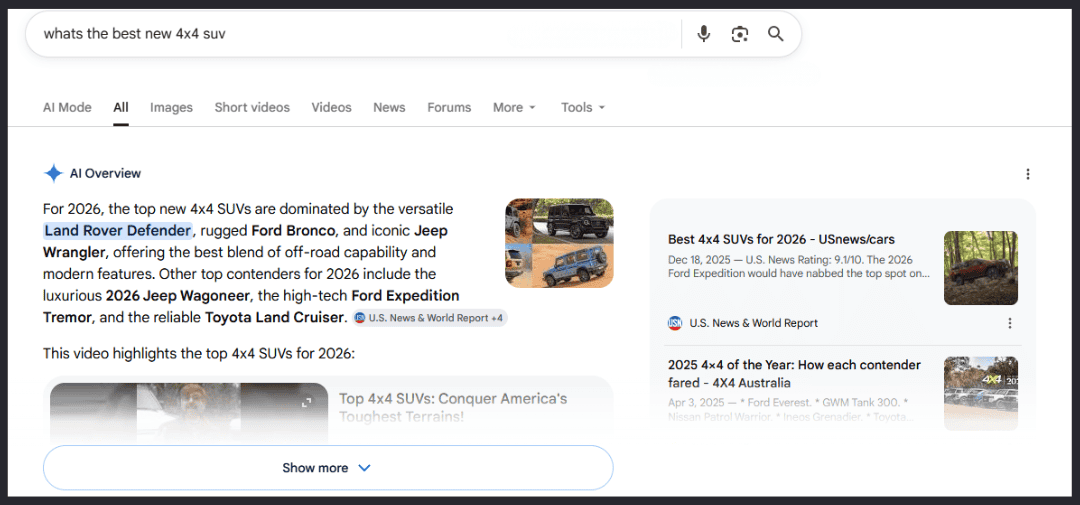
With Google’s Search Generative Experience (SGE), search results are evolving to incorporate generative AI features that provide direct answers, summaries, and recommendations. An AI overview of these developments highlights how search engines increasingly prioritize concise, structured content optimized for AI-driven interfaces. To adapt, structure your content to provide directly applicable answers and use schema markup to enhance visibility. For example, ensure your “how-to” guides are formatted for easy extraction into snippets.


5. Prepare for Zero-Click Searches

Zero-click searches occur when Google provides an answer right on the search results page, like in featured snippets or the People Also Ask section. To optimize for this, create content that answers questions directly within the first few lines and structure your articles using bullet points, lists, and tables to increase the likelihood of appearing in these snippets.

AI and Machine Learning

SEO Strategies for Success 6-10


6. Focus on Core Web Vitals

Google’s Core Web Vitals are a set of metrics used to measure user experience, focusing on loading speed, interactivity, and visual stability. These include Largest Contentful Paint (LCP), First Input Delay (FID), and Cumulative Layout Shift (CLS). Ensure your website loads quickly (under 2.5 seconds), is responsive to user interactions, and maintains a stable layout throughout loading to enhance user experience and improve rankings.


7. Optimize for Mobile and PageSpeed

With mobile-first indexing, Google now prioritizes mobile-optimized websites. Ensure your site is responsive and adapts to various screen sizes. Additionally, fast loading times are crucial for retaining visitors—optimize image sizes, minify CSS and JavaScript, and consider implementing AMP (Accelerated Mobile Pages) for better mobile performance.


8. Embrace Multimodal Search

Search engines are evolving to include multimodal queries that combine text, image, and video inputs. Optimize your content to be discoverable across multiple search mediums to stay ahead. Add alt text to images, use video transcriptions for video content, and include clear headers and metadata for all formats. For example, ensure that your videos have descriptive titles and captions and that your images are correctly tagged.


9. Leverage Semantic Search

Semantic search focuses on understanding the meaning behind words rather than matching exact keywords. To optimize for semantic search, create content that addresses topics in-depth, including related concepts and keywords that search engines can associate with your primary target keyword. Organize content into topic clusters with pillar pages to show Google your content’s broader context and relevance.


10. Master Voice Search Optimization

Voice search is growing rapidly due to the popularity of virtual assistants like Siri and Alexa. Optimize your content for natural, conversational language by targeting long-tail keywords and question phrases. Think about how people phrase search queries when speaking versus typing—e.g., “How can I find a good home builder in Melbourne?” rather than “Home builders Melbourne.”

SEO Strategies for Success 11-15


11. Create and Refresh Long-Form Content

Long-form content tends to rank better because it provides comprehensive, authoritative information on a given topic. Aim to produce detailed, evergreen content that can be regularly updated as trends, data, or algorithms change. Refreshing older content with new statistics, examples, or visuals can boost its relevance and SEO value over time.


12. Invest in Local SEO

Local SEO is essential for businesses serving specific geographical areas. Create and maintain an optimized Google My Business profile, encourage local reviews, and ensure your business is listed in relevant local directories. Use location-based keywords in your content, and ensure that your NAP (Name, Address, Phone number) information is consistent across the web.


13. Utilize Video SEO

Videos are becoming increasingly important for user engagement and search rankings, especially on platforms like YouTube, the second-largest global search engine. To optimize your videos for SEO, ensure your titles, descriptions, and tags include relevant keywords. Optimize your video content for user engagement by encouraging comments, likes, and shares. Utilize transcriptions for accessibility and to help search engines index your content. On YouTube, use custom thumbnails, and make sure your videos are correctly categorized with appropriate tags.

Video SEO

14. Expand Multilingual SEO

As search engines become better at understanding content in different languages, it’s crucial to localize content for international audiences. Use hreflang tags to specify language and region targeting, translate content thoughtfully, and research regional keywords to capture local search intent. Don’t just translate—adapt the content to fit local customs and preferences.


15. Enhance Image Optimization

Optimize images to improve page load speed and help search engines understand their content. Use descriptive file names, alt text, and image sitemaps to improve visibility. Compress images without sacrificing quality and implement responsive images to ensure they display correctly on any device.

Meta description and Image SEO

SEO Strategies for Success 16-20


16. Adopt Structured Data (Schema Markup)

Implementing schema markup helps search engines better understand the context of your content, which can result in rich snippets (e.g., reviews, FAQs, events). This can improve your click-through rate (CTR) and provide additional visibility in search results. For example, use schema to mark up your articles, product listings, or recipes.


17. Strengthen Internal Linking

Effective internal linking helps search engines crawl your site and pass link equity between pages. Organize content into logical structures, using descriptive anchor text and linking to related articles. This improves SEO and guides users through your content, enhancing their experience.


18. Earn High-Quality Backlinks

Backlinks from reputable sources serve as votes of confidence for your content. Build relationships with authoritative websites, guest post on industry blogs, and create high-quality content people naturally want to link to. Effective link building strategies include creating data-driven content, infographics, and valuable resource pages to attract backlinks.


19. Perform Regular SEO Audits

Regular SEO audits allow you to identify and fix issues like broken links, poor meta tags (including meta descriptions), and incorrect redirects. Ensure your site is crawlable and well-structured. Use tools like Google Search Console, Screaming Frog, or Ahrefs to identify areas for improvement and ensure optimal performance.


20. Focus on Technical SEO

Technical SEO involves optimizing your website’s infrastructure to ensure it is accessible to search engines and provides a seamless user experience. Focus on crawlability, indexation, canonical tags, and XML sitemaps. Address duplicate content, and ensure your robots.txt file is correctly configured.

Data Analytics

SEO Strategies for Success 21-25


21. Embrace Interactive Content

Interactive content like quizzes, calculators, and polls can significantly increase user engagement. The more time users spend on your site, the more likely they are to convert, and it’s a positive signal for search engines. Interactive content also tends to generate more social shares and backlinks.


22. Optimize for Conversational Search

With the rise of voice assistants, conversational search is a growing trend. Ensure your content answers questions in a conversational tone. Focus on long-tail keywords and natural phrasing. Use FAQ sections, bullet points, and concise paragraphs to increase your chances of ranking for voice searches.


23. Integrate Social Media into SEO

Although social media doesn’t directly impact rankings, it can drive traffic, brand awareness, and engagement, indirectly influencing SEO. Share blog posts, infographics, and other content on social platforms to increase referral traffic and engagement, which may also lead to backlinks.


24. Monitor User Behavior Analytics

Use tools like Google Analytics, heatmaps, and session recordings to analyze user behavior on your site. Monitoring metrics such as bounce rates, time on page, and scroll depth can help you improve content performance and drive organic traffic to your website.


25. Develop a Comprehensive Content Strategy

?A content marketing strategy is vital for creating consistent, high-quality, and SEO-friendly material. This strategy should involve regular posting schedules, detailed content planning, keyword targeting, and continuous optimization. Track performance using metrics like traffic, conversions, and engagement to adjust and improve over time. To understand how SEO and content marketing work together as a dynamic duo, read this insightful blog on SEO and Content Marketing.


Your Path to SEO Success in 2025

In conclusion, the digital landscape continues to evolve rapidly, and the strategies that worked yesterday may not hold the same power tomorrow. As we move forward, one thing remains clear: your website’s visibility and success will depend on your ability to adapt and stay ahead of the SEO curve.

The 25 SEO strategies for success outlined above are vital to ensuring your brand remains competitive and visible in organic search. You’ll position your website for long-term success by embracing the latest trends. However, the importance of high-quality content and a seamless user experience cannot be overstated. As search engines continue to prioritize websites that provide actual value to users, your strategy should remain centered on delivering relevant, engaging, and well-optimized content.

So, stay proactive, stay informed, and let your SEO strategy be a testament to your commitment to providing lasting value today, in 2025, and beyond.

Ready to take your SEO to the next level? Take time out and contact us today. Let’s create a strategy that makes a real difference for your website and helps your business grow.


FAQs

What is the best SEO strategy for 2025?

The best SEO strategy for 2025 will combine the fundamentals of SEO with newer trends like AI-powered content optimization, mobile-first indexing, and enhancing user experience with features such as Core Web Vitals. Focusing on search intent and E-E-A-T will also be key to building sustainable rankings.

How can I make my SEO more successful?

SEO success relies on continuously adapting to the latest algorithm changes, optimizing for a mobile-first world, and producing high-quality, valuable content. Utilizing AI and machine learning tools for keyword research, content creation, and optimization will also give your strategy an edge.

How do I improve my SEO strategies for better results?

To improve SEO strategies, focus on content quality, user experience, technical SEO, and authoritative backlinks. Regularly audit your site for issues like slow load times, broken links, or poor mobile performance. Also, stay updated with the latest SEO trends and algorithm changes to ensure your strategies remain relevant.

What are the most important factors in SEO?

The most important factors for SEO success in 2025 include optimizing for search intent, mobile-first indexing, improving page speed, creating high-quality content, acquiring backlinks, and enhancing user experience. Structured data, voice search optimization, and local SEO are also becoming more important.

Are You Ready to Take Time Out?

Let’s create strategies that deliver real results for your business.