Is Your Evergreen Content Ready for AI Search?

Is Your Evergreen Content Ready for AI Search?

Evergreen Content Ready for AI Search

AI search is transforming how people find information online. With Google launching AI Overviews, Bing adding Copilot, and new competitors like Perplexity offering conversational answers, the search world is changing quickly. For marketers, this means a shift in how content is discovered, summarized, and recommended.

Evergreen content has always been a key part of digital marketing. It regularly drives traffic, boosts authority, and answers questions long after it’s published. But the question now is: Is your evergreen content ready for AI search?

This blog discusses how to audit, optimize, and update evergreen content to keep it visible in AI-driven search results. You’ll learn how to structure posts for snippets, optimize for question-based queries, and write in a way that AI models prioritize.


What Does Evergreen Content Mean?

Evergreen content includes articles, guides, or resources that stay relevant over time. Think of it as sustainable content. This type of timeless content isn’t tied to trending topics but instead provides content with lasting value that continues to attract an audience and search traffic. Therefore, making your business site important for people who research a specific topic.

Studies show that businesses that blog regularly see a 55% increase in website visitors, highlighting the value of consistent, high-quality content. This steady traffic benefits your readers, enhances your site’s performance in search engines, and can even support your social media presence by providing shareable content.

Examples of evergreen content include:

  • How-to guides and tutorials
  • FAQs or explainer posts
  • Industry glossaries or definitions
  • Best practices and strategy guides
Is Evergreen Content Good for SEO

Is Evergreen Content Good for SEO?

The value of evergreen content lies in its longevity, offering lasting SEO advantages and increasing its relevance for search engines. A well-written post can generate organic visits for years while earning backlinks and engagement that boost your site’s authority.

Unlike trend-based content that peaks quickly, evergreen content creates a foundation for long-term visibility. In today’s AI-first search world, that foundation matters more than ever. Evergreen content needs more than just staying power; it requires clarity, freshness, and adaptability to remain visible in AI-driven search results.


How to Optimize Content for AI Search?

AI search operates differently from traditional results. Instead of showing a list of links, AI usually produces a synthesized answer that combines information from multiple sources. To stay part of that conversation, your content must be:

  • Structured clearly for machine readability
  • Concise and direct for quick summaries
  • Up-to-date, so it remains credible
  • Semantically rich so AI models can understand the context

The goal is no longer just ranking on the first page of Google’s search results. Instead, it’s about ensuring your evergreen content piece is selected for AI snippets and overview answers.
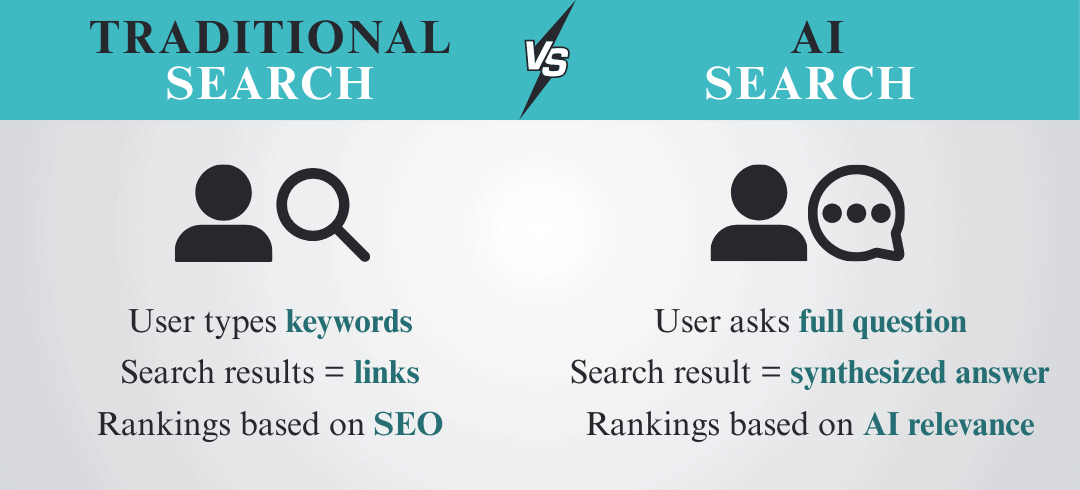
Traditional Search vs AI Search

How to Get Your Evergreen Content Ready for AI Search: Step-by-Step

To put this into practice, here are five practical steps to ensure your evergreen content remains visible and effective in an AI search world.


Step 1: Audit Your Evergreen Content for AI Visibility

Before you begin optimizing, assess what you currently have. Auditing helps you determine which posts are still effective and which ones need improvement.

How to run an audit:

  1. Check traffic and rankings: Use Google Search Console to see which evergreen pieces are still generating impressions.
  2. Test AI visibility: Run queries in Google AI Overviews or ChatGPT to see if your content is being referenced.
  3. Benchmark competitors: Identify who is winning AI snippets for your target keywords.

This process shows where your evergreen content is lagging. From there, you can focus on updates and improvements.


Step 2: Structure Content for AI Overviews and Snippets

AI models prefer content that’s easy to analyze and summarize. A lengthy block of text won’t work. Instead, organize your content clearly.

Best practices:

  • Use headings (H2, H3) to break content into logical sections.
  • Summarize key points in bullet lists or numbered steps.
  • Answer questions directly within the first few sentences of a section.
  • Add schema markup like FAQ or How-To where appropriate.

For example, if you write a post titled “How AI and Generative Search Are Changing Content Strategy,” don’t bury the answer. Start by clearly summarizing the key insights from the introduction, highlighting how AI affects content discovery and structuring, so both readers and AI models instantly understand its value.

Step 3: Optimize for Question-Based Search

AI search thrives on conversational queries. People are asking full questions rather than typing short keywords, and AI tools are trained to answer them.

How to adapt your evergreen content:

  • Add an FAQ section at the end of your post.
  • Use natural language questions as subheadings.
  • Include long-tail keywords like ‘Content Marketing Strategies to Drive Leads’ instead of only targeting ‘Content Marketing Strategies.’
  • Provide both short answers and expanded explanations.

Think of it this way: if a user asks an AI tool a direct question, your content should include the exact phrasing and the best possible answer.


Step 4: Refresh Outdated Evergreen Posts

Even the most evergreen content must be refreshed to maintain content with ongoing relevance in AI-powered SERPs. AI systems reward updated content because they aim to provide accurate and current information.

Ways to refresh evergreen content:

  • Update statistics, research, and examples with the latest data.
  • Replace outdated screenshots, tools, or references.
  • Add new insights that reflect current industry trends.
  • Re-check internal and external links to avoid broken references.

For example, a post written in 2020 about “SEO best practices” should be updated to include AI-driven search in 2025. Without updates, AI models may overlook your content and instead surface newer sources.

Semantic Clarity

Step 5: Write with Semantic Clarity and Concise Answers

AI tools don’t just look for keywords; they analyze meaning. That’s why semantic clarity is critical.

Tips for writing AI-ready content:

  • Be concise. Short, direct sentences are easier for AI to process.
  • Use semantic variations. If your focus keyword is ‘evergreen content,’ include related terms such as timeless content, sustainable content, content with lasting value, content with ongoing relevance, and long-term content assets.
  • Avoid jargon overload. Clarity beats complexity.
  • Balance depth with skim ability. Offer detailed insights but keep them easy to digest.

This way, content attracts both human readers and AI algorithms.


Optimizing Today, Creating for Tomorrow

Evergreen content continues to be one of the most powerful long-term content assets in your content marketing strategy. In the age of AI search, it must adapt to attract readers and perform well in AI-powered results. By auditing existing posts, structuring them for snippets, optimizing for questions, updating outdated content, and writing with semantic clarity, you ensure your content is both SEO-friendly and AI-ready.

Not sure where to start? Contact us today. We’ll help you optimize existing content and create new resources so your evergreen content is ready for AI search, keeping your brand visible in a changing search landscape.

FAQs

What is evergreen content?

Evergreen content is content that remains relevant over time, providing lasting value to readers. Examples include how-to guides, FAQs, industry glossaries, and best practice guides.

Why is evergreen content important for my business?

Evergreen content drives consistent traffic, boosts authority, improves search engine rankings, and supports social media sharing. Businesses that blog regularly see more website visitors than those that don’t.

How does evergreen content help with SEO?

Evergreen content generates ongoing visits, backlinks, and engagement, signaling relevance to search engines. It provides a lasting foundation that can also be leveraged in AI-powered search features, such as snippets, overview answers, and conversational responses.

How can I optimize evergreen content for AI search?

Structure your content clearly with headings, bullet points, and concise summaries. Include semantic variations, answer common questions directly, and keep content up-to-date to remain credible for AI-driven search results.

How often should I update evergreen content?

Even evergreen content should be refreshed periodically. Update statistics, examples, tools, and industry trends to maintain relevance and ensure AI systems consider your content accurate and current.

Can evergreen content improve my social media presence?

Yes. Shareable, high-value evergreen content can support your social media strategy by providing valuable resources your audience will engage with, driving traffic back to your site.

What is semantic clarity, and why does it matter for AI?

Semantic clarity means writing in a way that clearly communicates the meaning of your content. AI models analyze meaning, not just keywords, so clear, concise, and context-rich writing increases the chances your content will be selected for AI summaries and answers.

Are You Ready to Take Time Out?

Let’s create strategies that deliver real results for your business.
Top 5 Content Marketing Strategies to Drive Leads in 2025

Top 5 Content Marketing Strategies to Drive Leads in 2025

Content Marketing Strategies to Drive Leads

Content marketing is constantly evolving, and finding the right content marketing strategies to drive leads has never been more critical. Each year brings new challenges and opportunities for businesses to attract and engage their target audiences. If you’re not staying up to date with the latest trends, you risk falling behind.

In 2025, the landscape will shift yet again, with new technologies and consumer behaviors reshaping how brands connect with their audiences. However, one thing will remain the same: the need for innovative strategies that capture attention and drive actual, measurable leads.

Before diving into the strategies, it’s important to address some fundamental questions about content marketing and how it contributes to lead generation. These answers will help you better understand how to apply the strategies to your marketing efforts.


How Does Content Marketing Generate Leads?

Content marketing generates leads by providing valuable information that addresses the pain points of your target audience. Instead of pushing your product, content marketing pulls your audience in by offering solutions, insights, and answers that resonate with their interests. By creating content that aligns with what your customers are searching for, you can build trust, establish authority, and ultimately guide them toward conversion.

How to Increase Leads from Content Marketing?

To increase leads from content marketing, focus on delivering relevant content tailored to your audience’s preferences. Optimize your content for SEO, promote it across multiple channels like social media and email marketing, and make sure it includes strong CTAs. Regularly analyze your metrics to understand what’s working, and adjust your strategy accordingly. Engaging content that encourages interaction—such as quizzes, surveys, or product demos—also helps increase lead conversions.

Lead generation

Which Type of Content is Most Effective for Lead Generation?

Interactive content, educational blog posts, gated content, case studies, and video tutorials are highly effective for lead generation. These types of content engage users more deeply, offer value, and often include actionable steps that can drive a lead to convert. For instance, case studies can show the real-world impact of your product or service, while video tutorials can visually demonstrate how your solution works.


How Can Content Marketing Drive More Traffic?

Content marketing drives traffic by providing value through various forms of content, such as blogs, videos, social media posts, and more. Well-optimized content that answers specific user queries and matches the search intent will rank higher in search engine results and drive organic traffic. By understanding your buyer personas, you can create content that resonates with your target audience’s needs and preferences. Additionally, by promoting your content on the right platforms and encouraging social sharing, you increase its visibility and reach, which leads to more traffic.

So, what should your business focus on in 2025?

Here are the top 5 content marketing strategies to drive leads and help you stay ahead of the competition in 2025.


Top 5 Content Marketing Strategies to Drive Leads

content marketing strategies to drive leads in 2025

1. Interactive and Personalized Content

In today’s digital age, personalization is no longer a luxury—it’s an expectation. In 2025, this trend will only grow, and the brands that master personalization will dominate the market. Interactive content plays a key role in delivering these personalized experiences.

What does this look like? Think about quizzes, calculators, polls, or even augmented reality experiences that engage users in a way static content can’t. Instead of passively consuming information, users interact with your brand, and in doing so, they leave behind valuable data that can be used to personalize future interactions.

For example, imagine a real estate agency that offers an interactive home affordability calculator on its website. Users input their income, savings, and desired location to get a list of homes within their budget. This tool engages the visitor and gives the agency key insights into what the user wants—perfect for follow-up targeted marketing.

The Impact of Interactive Content on Lead Generation

Interactive content is effective as lead magnets because it increases engagement by providing value in exchange for the user’s time. When combined with personalization, it creates a memorable experience that builds trust. Most importantly, it lets you capture more qualified leads because users are already invested in interaction.

Video and Short-Form Content

2. Video and Short-Form Content Domination

If you’re not already using video in your content marketing strategy, 2025 is the year to start. And it’s not just any video—short-form content is where it’s at. Platforms like TikTok, Instagram Reels, and YouTube Shorts have proven the power of snackable, fast-paced content that grabs attention quickly.

61% of B2B marketers see their organizations increasing investments in video in 2025, highlighting the growing importance of this medium. In a world of information overload, audiences crave quick, easy to digest, and entertaining content. Tutorials, product demonstrations, or behind-the-scenes glimpses into your brand’s daily operations are perfect ways to showcase what you offer in an authentic and relatable way.

Why Short-Form Videos Matter

Short-form content aligns with how users consume media today—fast and on the go. With the average attention span shrinking, brands must deliver their message quickly and effectively. These bite-sized videos are perfect for grabbing attention and encouraging viewers to take the next step, whether visiting your website, signing up for a newsletter, or making a purchase.

The Power of Video for Lead Generation

Creating engaging, shareable video content increases brand awareness and visibility. A 30-second video can be all it takes to convert a viewer into a lead—especially when paired with a compelling call-to-action (CTA) like “Sign up for exclusive updates” or “Learn more about our services.”

3. AI-Generated and Augmented Content

Artificial intelligence (AI) is no longer a futuristic concept—it’s here, and it’s changing the way content is created and delivered. In 2025, AI-powered content creation tools will take center stage, enabling brands to produce personalized, high-quality content faster than ever before.

With AI handling content creation, you can quickly develop optimized landing pages tailored to different audience segments, allowing for higher personalization and relevance in your marketing. Notably, under 50% of marketers identify content creation as the leading application of AI in their content marketing strategies to drive leads. AI can generate everything from a blog post to social media content, video scripts, and product descriptions.

But it doesn’t stop there—AI also powers the data analytics that help brands understand customer behavior, predict trends, and personalize the customer journey. For example, AI can analyze customer data and automatically generate personalized content recommendations based on each visitor’s behavior. You can use AI to create dynamic email campaigns that adapt in real time, responding to user interactions to deliver relevant content.

Why AI Matters for Lead Generation

AI-driven content creation allows you to scale personalization efforts, delivering the right message to the right person at the right time. By making your content highly relevant to individual users, you increase the likelihood of conversion—whether that’s capturing a lead or making a sale.

And with AI handling many of the repetitive tasks associated with content creation, your marketing team can focus on strategy and creativity, driving even more meaningful engagement.

Voice assistant

4. Voice Search Optimization

With smart assistants like Alexa, Google Assistant, and Siri becoming household staples, voice search continues to rise. Did you know that 93.7% of search queries are answered accurately by voice search assistants, showcasing their reliability? Projections indicate that by 2025, over half of all online searches will be conducted via voice. So, if you’re not optimizing your content for voice search, you’re missing out on a huge opportunity to drive leads.

Voice search queries tend to be longer and more conversational than typed searches. For instance, instead of just searching ‘home builders,’ a user might ask, ‘How do I choose the best home builder for my project?’ or ‘What are the steps to building a new house?’ This shift in search behavior highlights the importance of optimizing content to answer these specific, more detailed questions.

How to optimize for voice search:

  • Focus on long-tail keywords that mimic natural speech patterns.
  • Create content that answers specific, question-based queries.
  • Structure your website so that key information is easily found and quickly pulled into a voice search result.

Why Voice Search Works to Generate Leads

When your content is optimized for voice search, you’re making it easier for users to find you, positioning your brand as the answer to their questions. This builds trust and increases the likelihood that they’ll engage further, whether by visiting your landing page or contacting your business for more information.

User-generated content

5. Community-Driven and User-Generated Content

In an age where consumers are bombarded with brand messages, people seek authenticity. That’s where community-driven and user-generated content (UGC) comes into play. In 2025, fostering an engaged community around your brand will be crucial to driving leads.

UGC refers to content your customers or audience creates, like reviews, testimonials, and social media posts. Real people sharing their experiences with your brand builds trust and authenticity—far more than any marketing message you could create.

How to leverage UGC and the community:

  • Create branded social media groups where users can share their stories and engage with one another.
  • Encourage customers to post reviews or tag your brand in their social media content.
  • Develop ambassador programs that reward loyal customers for promoting your brand.

Why UGC Works for Lead Generation

UGC serves as social proof—for each piece of content your audience shares, potential customers are more likely to trust a recommendation from a fellow consumer than a brand. You can build credibility and convert prospects into quality leads by showcasing real-world examples of how people use and love your products.


The Road Ahead

The content marketing landscape in 2025 will be more dynamic and interactive than ever before. From AI-powered personalization to short-form videos and community-driven content, these content marketing strategies to drive leads are designed to help businesses stand out and generate meaningful engagement.

As a brand, the key is to stay adaptable and embrace the tools and technologies to keep you ahead of the competition. Whether optimizing for voice search or engaging users with interactive content, now is the time to implement these strategies.

Ready to boost your content marketing strategy for 2025? Take time out and contact us today to discover how we can help you drive more leads with these cutting-edge techniques.

Are You Ready to Take Time Out?

Let’s create strategies that deliver real results for your business.

7 Proven Content Marketing Tactics to Generate Quality Leads

7 Proven Content Marketing Tactics to Generate Quality Leads

content marketing tactics

In today’s crowded digital landscape, the right content marketing tactics are crucial for generating quality leads. A strong content strategy attracts potential customers and builds relationships that convert leads into loyal clients. According to 74% of companies, content marketing has proven effective in boosting lead generation, demonstrating its value in today’s competitive market.

To stand out from the competition and drive tangible results, it’s essential to leverage proven content marketing tactics. In this blog, we’ll explore key strategies to help elevate your content efforts and consistently deliver high-quality leads for your business.


1. Know Your Audience Inside Out

The foundation of any successful content marketing strategy lies in understanding your audience. Without this, even the best content may fall flat. To generate quality leads, your content must resonate with the people most likely to benefit from your product or service. Here’s how to get started:

  • Develop Buyer Personas: Create detailed profiles of your ideal customers based on demographics, behaviors, pain points, and goals. Tools like Google Analytics or social media insights can help you gather this data.
  • Customer Journey Mapping: Understanding the stage of the buying cycle your audience is in will help you create targeted content that addresses their specific needs, whether they are just discovering your brand or ready to make a purchase.

By speaking directly to your audience’s challenges, your content will feel more personal and relevant, encouraging users to engage and move further along the sales funnel. Understanding your audience is the foundation, but the value you offer is what keeps them engaged.

know your audience

2. Create High-Quality, Valuable Content

High-quality content is key to lead generation—delivering real value, not just publishing frequently. Here are the key types of content that perform well in generating leads:

  • Blog Posts: Regularly updated blogs can drive organic traffic by addressing topics that matter to your target audience. 56% of marketers who leverage blogging say it’s their most effective content tactic, so focus on educational content that answers your audience’s pressing questions.
  • eBooks and Whitepapers: Long-form content, such as eBooks and whitepapers, are excellent for capturing leads. Offer these resources in exchange for a reader’s contact information, allowing you to follow up with nurturing emails.
  • Case Studies and Success Stories: Showcasing your expertise and past successes through case studies builds credibility and demonstrates the value of your offerings to potential clients.

To ensure the effectiveness of your content, always aim for quality over quantity. Each piece should be well-researched, engaging, and aligned with your audience’s needs. This is where a content marketing strategist can make a difference—by crafting a tailored strategy that ensures your content resonates with your target audience and drives results.

Content Marketing Tactics 2

3. Optimize for SEO and Search Intent

For content marketing to generate leads, your audience must first be able to find it. This is where Search Engine Optimization (SEO) comes into play. When your content ranks well in search results, you drive more organic traffic to your site, which leads to more potential customers entering the funnel. Here’s how to improve your SEO:

  • Conduct Keyword Research: Tools like SEMrush or Ahrefs help you find keywords based on your audience’s interests. Incorporate these strategically into your content, without overstuffing them.
  • Optimize On-Page SEO: Ensure each piece of content includes optimized meta tags, headers, and image alt texts. Make your content easy to read with clear formatting and scannable sections.
  • Focus on Search Intent: Understand the user intent behind the keywords your audience searches for. Are they looking for information, comparing options, or ready to buy? Align your content with this intent to effectively address their needs.

By optimizing your content for both SEO and search intent, you increase your visibility and attract more qualified traffic—those who are already looking for solutions that your business provides.

4. Utilize Lead Magnets

Lead magnets are a powerful way to convert website visitors into leads. These are free resources that offer value to the reader in exchange for their contact information. Effective lead magnets include:

  • Free Guides or Reports: Create downloadable content that addresses specific pain points or challenges your audience faces. For example, a home building company might offer a guide on “Choosing the Right Builder: A Comprehensive Guide for Home Buyers.”
  • Webinars and Workshops: Hosting a free webinar on a relevant topic allows you to engage directly with potential leads. By offering expertise and solutions, you position yourself as an authority in your field.
  • Checklists and Templates: These are simple but effective tools that provide immediate value. For instance, a checklist for optimizing blog posts for SEO can help your audience take actionable steps.

When offering a lead magnet, ensure the content is highly targeted and solves a real problem. This will encourage visitors to share their information and begin engaging with your brand. In fact, 87% of B2B marketers successfully use content marketing to generate leads, highlighting the effectiveness of providing valuable resources to your audience.

Lead Generation

5. Leverage Email Marketing for Lead Nurturing

Once you’ve captured leads, the next step is nurturing them until they’re ready to buy. The key to successful email marketing is personalization—building trust through tailored communication. This lets you offer value, build relationships, and guide leads through the sales funnel. Here’s how to do it effectively:

  • Segment Your Email Lists: Not all leads are the same. Segment your audience based on their behavior, preferences, and where they are in the customer journey. This approach helps you send more personalized and relevant content to each segment.
  • Create Drip Campaigns: Automated email sequences, also known as drip campaigns, allow you to nurture leads over time. By providing helpful content, product information, and testimonials, you can gradually build trust and move leads closer to a purchase.
  • Include Strong CTAs: Every email should have a clear call-to-action (CTA), whether downloading a guide, booking a consultation, or visiting a product page. Keep your CTAs simple and focused on the next logical step in the lead’s journey.

Email marketing is an ongoing process. You can convert warm leads into paying customers by delivering consistent value and personalizing your approach.

Content Marketing Tactics 3

6. Repurpose and Promote Your Content Across Channels

To maximize the impact of your content, consider repurposing it across multiple platforms. This extends the lifespan of your content and increases its reach. Here’s how to get started:

  • Social Media Marketing: Share your blog posts, infographics, and videos on platforms where your audience is active. Tailor the messaging to each platform’s unique style—LinkedIn posts might be more formal, while Instagram content could be more visual.
  • Guest Posting: Collaborating with other industry blogs or websites helps you tap into new audiences and positions your brand as a thought leader.
  • Video Content: Turn blog posts into video summaries, which can be shared on YouTube or other social channels. Videos tend to engage users and keep them on your site longer, which improves SEO performance.

By repurposing content and distributing it effectively, you increase your chances of reaching potential leads in different formats and on various platforms.

Content Strategy

7. Use Analytics to Refine Your Strategy

Data-driven decision-making is crucial for the success of any content marketing strategy. Use analytics tools like Google Analytics, HubSpot, or SEMrush to measure the performance of your content. Key metrics to track include:

  • Traffic and Engagement: Monitor the number of visitors and the level of engagement (e.g., time on page, bounce rates) to identify which content resonates most with your audience.
  • Conversion Rates: Analyze the percentage of visitors who take the desired action, whether filling out a form, downloading a lead magnet, or subscribing to your newsletter.
  • Content ROI: Determine which content types drive the most leads and conversions, then adjust your strategy to focus on what works best.

By tracking and applying data-driven insights, you can consistently refine your content strategy to attract high-quality leads.


The Bottom Line With Content Marketing Tactics

Content marketing remains one of the most powerful tools for generating quality leads in the digital age. By understanding your audience, creating valuable content, optimizing for SEO, and leveraging lead magnets, you can attract potential customers and nurture them through the sales funnel. Incorporating email marketing, promoting content across channels, and using data to refine your approach will ensure long-term success.

Ready to take your content marketing to the next level and generate more leads? Take time out and contact us today. Let’s create a strategy tailored to your goals.

Are You Ready to Take Time Out?

Let’s create strategies that deliver real results for your business.